Push pull marketing: Build a Predictable B2B Lead Pipeline
Discover push pull marketing tactics to attract high-quality leads, boost conversions, and build a reliable B2B sales pipeline.
Push and pull marketing. You’ve heard the terms, but what’s the real difference? It’s the strategic choice between shouting your message from the rooftops versus setting up a magnet that draws in customers already looking for you.
Push marketing is like casting a massive net into the ocean—you’re broadcasting your message far and wide, hoping to catch anyone who might be interested. On the other hand, pull marketing is like baiting a hook with exactly what a specific fish is hungry for. You wait for them to come to you.
The smartest B2B marketers know the secret isn't choosing one over the other. It's about combining both to create a lead pipeline you can actually count on.
Understanding Push and Pull Marketing
Imagine you’ve just built an incredible new piece of software. It solves a massive problem most businesses don't even realise they have yet. If you just sit back and wait for them to search for a solution on Google, you'll be waiting forever. It’s like waiting for rain in the desert.
In this scenario, you have to push. You need to get your message out there and interrupt their day to show them what they’re missing.
Now, picture a totally different situation. A company's project management system is a complete mess, and the team lead is desperately Googling "best Trello alternatives for large teams." If you’ve written an in-depth guide on that exact topic, you can pull them right into your world with valuable content, positioning your software as the obvious answer to their pain.

This simple contrast gets to the heart of the push-pull dynamic. It's not about which method is better; it’s about knowing when to broadcast and when to attract.
The Core Philosophies
When you boil it down, the difference really comes down to intent and who makes the first move.
- Push Marketing (Outbound): This is the proactive stuff. You’re initiating the conversation by putting your message directly in front of a potential audience. Think of it as knocking on their door. This approach works wonders when you need to build brand awareness fast or you’re launching something completely new to the market.
- Pull Marketing (Inbound): This strategy is all about reacting to a customer's existing need. You create genuinely useful assets—blog posts, guides, tools—that people discover when they’re actively trying to solve a problem. This builds trust and authority, pulling in high-intent leads who already know they need help.
To truly master this, it helps to understand the one-to-one marketing principles that are the foundation of any personalised campaign.
Why a Hybrid Approach Is Essential
Here’s the thing: relying on just one of these strategies leaves massive gaps in your pipeline.
Go all-in on push, and you risk annoying people with interruptive ads and attracting a lot of low-quality leads. Go all-in on pull, and you might find it takes forever to gain momentum, completely missing out on audiences who aren’t actively searching yet.
The best B2B marketers don’t see push and pull as enemies. They see them as two complementary engines powering one high-performance lead generation machine. Push fills the top of the funnel with awareness, while pull converts that awareness into qualified leads who are ready to talk.
When you integrate them, you create a powerful system. Your proactive push efforts drive traffic to the valuable, attractive pull content you’ve created. This synergy is what solves those all-too-common pipeline headaches, like unpredictable lead flow and dismal conversion rates. It builds a marketing operation that's not just effective, but resilient.
Push vs. Pull: A Head-to-Head Comparison
To really get a feel for push and pull marketing, you need to see them side-by-side. It’s not just about textbook definitions; it’s about understanding their completely different roles, costs, and the audiences they’re built for. Pitting them against each other shows you exactly when to shout your message from the rooftops and when to become the trusted voice people seek out on their own.
Let's break down how these two powerful approaches stack up on the things that actually matter to B2B marketers.

Objectives and Audience Intent
A push strategy is all about manufacturing demand out of thin air. Its main job is to build awareness for something people don't even know they need yet. Think about launching a brand-new SaaS feature into a market that isn’t searching for it, or trying to fill seats for a time-sensitive webinar. In these cases, audience intent is basically zero—you have to interrupt their day to get them interested.
On the flip side, a pull strategy is built to capture existing demand. The goal here is to become an authority and magnetise high-intent prospects who are already actively looking for answers. This is where you write the definitive guide on a core industry problem, drawing in an audience that’s already painfully aware of their issue and is hunting for an expert to solve it.
Channels and Cost Structure
The channels for each strategy are a dead giveaway of their philosophy. Push marketing leans heavily on outbound and paid channels to shove the message directly in front of people.
- Common Push Channels: Paid social media ads (think LinkedIn or Facebook), display advertising, cold email outreach, and even direct mail.
- Cost Structure: This is pay-to-play. The costs are direct, upfront, and usually tied to impressions or clicks (CPC). It’s predictable but can get seriously expensive to maintain over the long haul.
Pull marketing, however, is all about inbound channels that attract prospects organically over time.
- Common Pull Channels: Search engine optimisation (SEO), content marketing (blogs, whitepapers), organic social media, and customer referral programmes.
- Cost Structure: The investment here is mostly in time and resources—the sweat equity of creating great content and optimising your online presence. It might seem cheaper at first, but it’s a long-term play that requires consistent effort to build momentum.
At its core, the choice comes down to speed versus sustainability. Push marketing buys you immediate reach for a direct cost, while pull marketing builds a valuable, long-term asset that generates leads for free, forever.
Push Marketing vs Pull Marketing at a Glance
To make the differences crystal clear, here’s a table that boils it all down. Use this as a quick reference sheet when you're stuck deciding which path to take for your next campaign.
| Criterion | Push Marketing (Proactive Outreach) | Pull Marketing (Inbound Attraction) |
|---|---|---|
| Primary Objective | Generate immediate demand and build brand awareness quickly. | Capture existing demand and build long-term brand authority. |
| Audience Intent | Low to non-existent; the audience is not actively looking. | High; the audience is actively searching for solutions or information. |
| Key Channels | Paid ads, cold outreach, direct mail, trade shows, TV/radio. | SEO, content marketing, organic social media, webinars, word-of-mouth. |
| Cost Model | Primarily direct ad spend (CPC, CPM); often higher upfront costs. | Primarily resource and time investment; builds value over time. |
| Measurement (KPIs) | Impressions, Click-Through Rate (CTR), Cost Per Lead (CPL). | Organic traffic, conversion rate, time on page, customer lifetime value. |
| Example Scenario | A SaaS company runs targeted LinkedIn ads to promote a new feature. | A consulting firm creates a comprehensive guide on "improving supply chain efficiency." |
By getting a handle on these core differences, you can start building a much smarter, more deliberate marketing plan. The next piece of the puzzle is knowing the specific B2B situations where each strategy doesn't just work, but absolutely crushes it—making sure you apply the right pressure at exactly the right time.
When to Use Push Marketing for Maximum Impact
There are moments when sitting back and waiting for customers to find you just won't cut it. While pull marketing is great for building a long-term reputation, a proactive push marketing strategy is what you need when you have to create your own momentum. It's about taking your message and putting it directly in front of the right people, right now.
Think of it like this: opening a restaurant and hoping people wander in is pull marketing. Handing out flyers for a grand opening with a 50% off deal? That’s push. Both work, but only one creates immediate buzz and gets people through the door on day one. For B2B marketers, knowing when to push is the key to hitting those aggressive growth targets.
Launching a New Product or Service
When you're launching something brand new, nobody is searching for it. Why? Because they don't even know it exists. There's zero existing demand to "pull" from.
This is a classic push scenario. You have to interrupt your audience's day to show them the problem you solve and the brilliant new solution you've built.
- Paid Social Ads: Run hyper-targeted campaigns on LinkedIn to shove your new software feature in front of specific job titles in your dream industries.
- Cold Outreach: A sharp, well-written email sequence can introduce your service to a hand-picked list of potential clients who are a perfect fit.
The whole point is to manufacture awareness from scratch. You’re creating the initial spark that a pull strategy can fan into a flame later on.
Driving Time-Sensitive Actions
Urgency is a hell of a motivator, and push marketing is the perfect way to light that fire. This is especially true for things with a hard deadline, like webinars, conferences, or special promotions.
You can't just hope for organic discovery when the clock is ticking. You need to actively push reminders and calls to action to get people to sign up or buy. A limited-time offer is the perfect example—you have to create a sense of scarcity to force a quick decision. For more on this, check out our guide on how to run a successful Black Friday countdown.
A push strategy for a time-sensitive event is like sending out personalised invitations to a party. You wouldn't just hope people show up; you'd reach out directly to ensure they know when and where to be, and why they shouldn't miss it.
Executing Account-Based Marketing Plays
Account-Based Marketing (ABM) is basically push marketing on steroids. Instead of casting a wide net, you're going after a specific, high-value list of companies. The entire game revolves around proactively ramming your message in front of the key decision-makers within those target accounts.
This usually means a multi-channel push, combining digital ads with things like direct mail or personalised outreach to hit them from multiple angles. It's a surprisingly resilient tactic. Just look at the promotional products market, where physical push tactics create memorable brand experiences. Suppliers push inventory to distributors, who then meet the pull from clients needing swag for trade shows and events. You can dive deeper into the insights on the European promotional products market on asicentral.com. These tangible touchpoints make your digital campaigns stick and keep your brand top-of-mind with the people who can actually sign the cheques.
How to Attract Qualified Leads with Pull Marketing
Push marketing is all about interrupting. Pull marketing? It’s the long game.
Think of it this way: instead of shouting through a megaphone at a crowded street corner (push), you’re building the most interesting, helpful library in town. People who need answers naturally find their way to you.
The goal is to become such a trusted, valuable resource that your ideal customers are drawn to you like a magnet. This entire push pull marketing dynamic boils down to one simple idea: give away massive value before you ever ask for a single penny. You're not interrupting their day; you're creating the exact resources they're already desperately searching for.
Build Your Content Foundation
The entire pull strategy is built on a foundation of high-quality, SEO-optimised content. And this doesn't mean churning out generic blog posts that sound like a slightly rewritten Wikipedia article. I'm talking about getting inside your audience's head, understanding their biggest headaches, and creating the definitive solution.
Start by figuring out what your prospects are typing into Google. Use a keyword research tool to find those high-intent phrases, like "how to reduce supply chain costs" or "best CRM for small agencies." Then, build your entire content world around those topics.
- In-Depth Blog Posts: Go deep. Write the one article that ends their search and solves their problem completely.
- Comprehensive Guides & Whitepapers: Create genuinely useful, downloadable resources. These aren't just lead magnets; they're proof of your authority.
- Data-Driven Reports: Publish original research. Do the hard work of collecting and analysing data that others will want to cite, building powerful backlinks for you.
When you do this right, your website stops being a brochure and becomes a library of solutions. The next time a prospect has a problem, your brand is the first place they look.
100% Free Lead Magnet Audit
Our AI analyzes your website and delivers custom growth strategies in seconds.
Cultivate an Authoritative Presence
Just creating content isn't enough. You have to show up where your audience already spends their time. For most B2B folks, that’s LinkedIn.
But don't just dump links to your blog and log off. That’s amateur hour. Get in the trenches. Engage in conversations, share real insights, and add value without expecting anything in return.
By consistently showing up and being helpful, you build a reputation as a thought leader. This creates an insane pull effect. Prospects start following you for your expertise, not your product. So when the time comes that they actually need a solution like yours, you’re not a stranger—you’re the most trusted name they know.
You can get the full playbook on this content-first approach in our detailed pull marketing strategy guide.
Re-Engage with Modern Pull Tactics
Not every visitor will convert on their first visit. That’s where modern tactics come in to re-engage them without being creepy or intrusive. One of the most effective ways to do this is with personalised web push notifications.
Forget aggressive, screen-hogging pop-ups. We're talking about simple, browser-based notifications that interested visitors can choose to receive. You can then gently pull them back to your site with an alert about a new whitepaper or a relevant case study that just dropped, guiding them further down the funnel.
The web push advertising market is blowing up because people are tired of spam. They prefer real-time, personalised nudges from brands they already trust. In mature digital markets, this tactic has been shown to boost user engagement simply by tapping into a user's existing interest. You can check out the full research on these advertising trends over on Statista.
This gentle "pull-back" keeps you top-of-mind and moves prospects toward a decision without ever resorting to a hard push.
Integrating Push and Pull with Interactive Tools
Right, this is where the theory gets real and starts making you money. The actual power of push and pull marketing isn't about using them in isolation. It’s about building a seamless flywheel where they constantly feed each other. When you merge proactive push tactics with genuinely valuable interactive tools, you create a self-qualifying lead funnel that practically runs itself.
The model is surprisingly simple but brutally effective. You use a 'push' tactic, like a targeted LinkedIn ad, to drive the right kind of traffic. But instead of sending them to a static landing page with a boring PDF nobody wants, you point them to an interactive 'pull' asset—think a "Marketing ROI Calculator" or a "Cybersecurity Risk Assessment."
This simple change flips the entire script. The tool gives the visitor immediate, personalised value, and in return, you capture crucial zero-party data based on their answers. That data is the key to unlocking deep segmentation and follow-ups so relevant they feel psychic, turning ice-cold traffic into qualified leads.
The Blueprint for an Integrated Funnel
Let's get into the mechanics. The whole process boils down to four core steps that directly link your push ad spend to a pull conversion, creating a predictable pipeline.
Push Traffic Generation: You kick things off with a paid campaign on a platform like LinkedIn. Target a laser-focused audience—say, "Marketing Directors in the SaaS industry"—with an ad that hits a specific nerve. The call-to-action isn't a lame "Learn More." It’s something engaging like, "Calculate Your Lead Gen ROI in 60 Seconds."
Interactive Pull Conversion: The ad links straight to your interactive tool. This is your magnet. It has to be genuinely useful and solve a small but nagging problem for them. As they click through, they willingly hand over info about their challenges, budget, and company size in exchange for an instant, valuable result.
Zero-Party Data Capture: Unlike a simple form fill, the data you get here is drenched in context. You're not just learning that they need help; you're learning why. This is the gold dust that traditional lead magnets completely miss.
Automated Segmentation and Nurturing: Based on their answers, you can automatically sort leads into different buckets. This lets you follow up with messaging that speaks directly to their stated problems, which massively increases the odds of getting a sales conversation.
This whole flow is laid out below. It shows how you create that initial pull with valuable content, build authority, and then re-engage leads in a way that actually works.
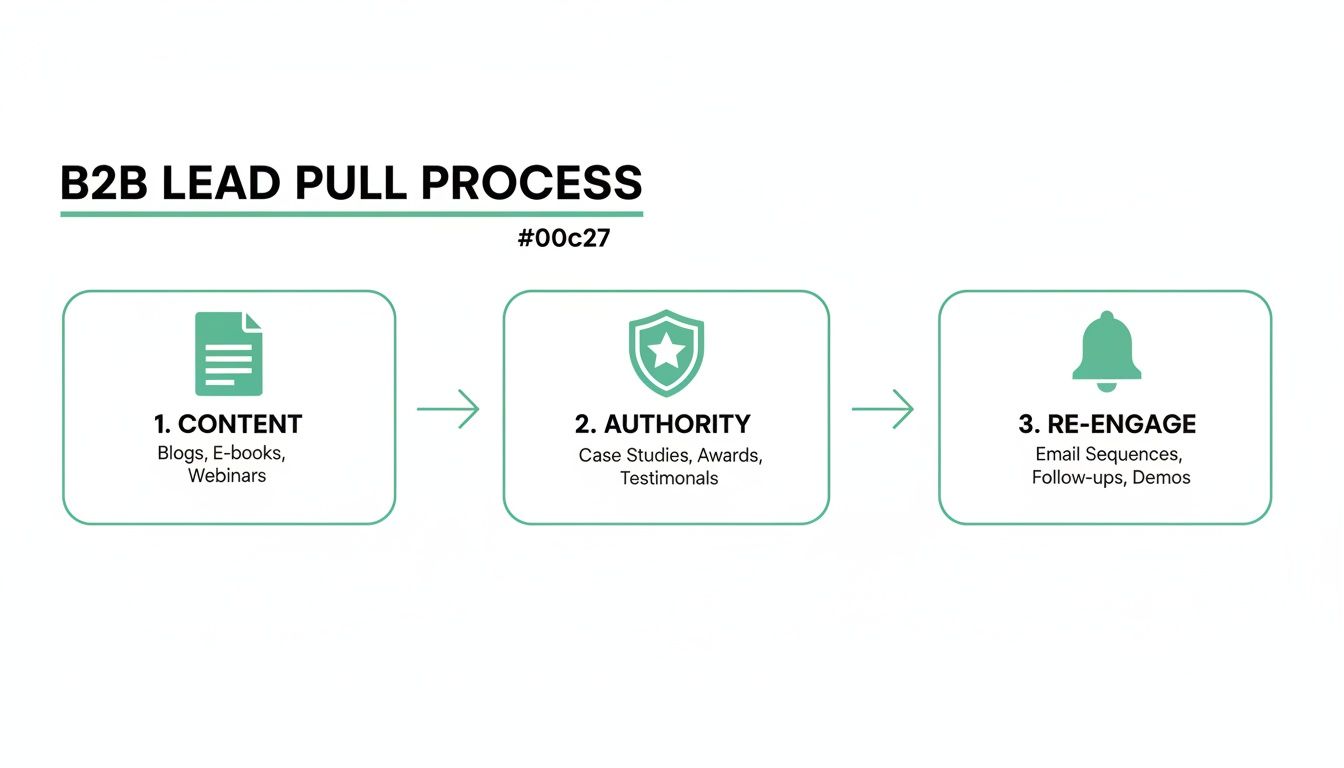
The diagram makes it clear: you start by giving value away (Content), which builds trust (Authority), and then you keep the conversation going (Re-engage). That’s the core of a modern pull strategy.
Scoring and Segmenting for Hyper-Relevance
Once you have the data, the real magic starts. You can set up a scoring system to automatically qualify and route leads where they need to go.
Let's go back to that "Marketing ROI Calculator." Imagine it asks about the user's current monthly ad spend. You could create rules like this:
- High Intent / Sales-Ready: If ad spend is over $10,000/month, assign a high score. This could trigger an instant Slack alert for a sales rep to follow up personally. That follow-up email can even reference the ROI they just calculated and suggest a strategy call.
- Info Seeking / Nurture Track: If ad spend is under $10,000/month, assign a lower score. This automatically enrols them in an email nurture sequence offering case studies and guides tailored to businesses their size.
This isn't just lead generation; it's lead intelligence. You’re using the pull of an interactive tool to understand intent. This lets your sales team focus only on the hottest opportunities while marketing warms up everyone else.
This whole model reminds me of how the industrial components market works. Suppliers push innovative designs to manufacturers, who then pull them into their processes to create consumer-ready products. In the same way, we're pushing interactive tools via ads to pull in highly segmented leads who are drawn in by the tool's utility.
Kickstarting Your Interactive Strategy
Okay, building your first interactive tool can feel like a huge task, but it doesn't have to be. To get a better feel for how these tools can boost your campaigns, check out this guide on using programmatic tools like chatbots for marketing.
The very first step is to pinpoint a high-value problem you can solve for your audience. What’s a calculation they always get wrong? What kind of assessment would bring them a moment of clarity? Brainstorming these ideas is half the battle.
By blending the immediate reach of push marketing with the magnetic value of pull-based interactive tools, you create a system that doesn't just find leads—it attracts, qualifies, and segments them on autopilot. You can learn more about this whole approach in our complete guide to interactive marketing.
Measuring the Success of Your Integrated Campaign
A brilliant strategy is just a nice-looking PowerPoint slide until it delivers results. If you really want to know if your push-pull marketing engine is working, you have to look past the fluffy vanity metrics and get straight to the numbers that connect to revenue.
Tracking the entire journey—from the first push ad a person sees to the final pull conversion—is the only way to prove this thing is actually making money.
This means you’re essentially watching two different but deeply connected scoreboards. One tells you how efficiently you’re getting in front of people, and the other tells you how good you are at turning that attention into real business.
Push Marketing KPIs: The Efficiency Metrics
When you’re pushing ads out into the world, your main goal is simple: get targeted awareness and drive traffic without burning through your entire budget in a week. Your metrics need to reflect that efficiency.
- Click-Through Rate (CTR): This number tells you flat out if your ad creative and message are hitting the mark. A low CTR is a loud signal that your message is falling flat with the audience you’re pushing it to.
- Cost Per Click (CPC): This is the price tag on getting one potential customer to your pull asset. Keeping this number low is absolutely critical for running a profitable campaign.
- Impressions: Okay, this isn't a conversion metric, but it’s still important. Tracking impressions shows you how big of a net you’re casting and how much visibility your push efforts are creating at the very top of the funnel.
Think of these top-of-funnel numbers as your early-warning system. They tell you if your ads are resonating and if your budget is being spent wisely enough to fuel the rest of the customer journey.
Pull Marketing KPIs: The Business Impact Metrics
Once someone clicks your ad and lands on your interactive tool, the game changes. We're no longer just talking about efficiency; we're talking about direct business impact. These are the numbers that show how well your pull assets convert casual interest into actual, tangible leads.
Measuring pull is about connecting marketing actions to sales outcomes. It's where you see how well your valuable content actually generates qualified opportunities and, ultimately, revenue for the business.
Here are the KPIs that truly matter:
- Conversion Rate: What percentage of people who use your quiz or calculator actually become a lead? This is the single most important metric for judging if your pull magnet is doing its job. Constantly analysing and improving this is non-negotiable; tools like Magnethive can run a free audit with AI-powered ideas to help you nail this specific KPI.
- Cost Per Acquisition (CPA): This is where push spending meets pull results. It calculates the total cost to get one new customer, giving you a crystal-clear view of whether your campaign is actually profitable.
- Lead-to-MQL Rate: Not all leads are created equal. This metric shows how many of the leads your pull asset generates are good enough for marketing to qualify. It's a direct reflection of the quality of traffic your push campaigns are driving.
By building a simple dashboard that follows the customer—from the initial ad impression (push) to the MQL conversion (pull)—you can see exactly how each stage is performing. This complete picture is essential for fine-tuning your strategy and proving its value to anyone who asks.
Got Questions About Push vs. Pull?
Let's clear up some of the common questions B2B marketers have when mixing push and pull strategies. My goal here is to give you straightforward, practical answers so you can put these ideas to work with confidence.
How Do I Choose Between Push and Pull for My Business?
It really boils down to two things: your immediate goals and how aware your audience is.
If you’re launching a brand-new product that nobody even knows to search for yet, you have to go with push marketing. Your first job is to get out there, educate the market, and create that initial spark of demand.
But if you’re playing the long game—building authority and attracting people who are already aware they have a problem and are actively looking for solutions—then a pull marketing strategy is your best bet. Think valuable content, SEO, and becoming the go-to resource in your niche. The smartest strategies, of course, find a way to make both work together.
Can Small Businesses Use Pull Marketing with a Limited Budget?
Absolutely. In fact, pull marketing is often a much better fit for small businesses than expensive, large-scale push campaigns. It’s more of a time and effort investment than a financial one.
Here’s what that looks like:
- Content Creation: Writing expert blog posts that answer the exact questions your ideal customers are typing into Google? That costs you time, not ad spend.
- Organic Social Media: Building a real community on a platform like LinkedIn by consistently sharing genuinely helpful insights is completely free.
- SEO: You can implement basic on-page SEO practices without spending a lot on expensive tools. Over time, that effort pays off in organic traffic.
What Is the Biggest Mistake to Avoid When Combining Push and Pull?
The single biggest screw-up is inconsistent messaging. It creates a jarring experience for the user and kills trust instantly.
Imagine running a push ad campaign with aggressive, salesy language that then dumps the user onto an educational, top-of-funnel blog post. It's confusing. The tone is off, the expectation is broken, and people will bounce.
Your push tactics should feel like a natural, seamless doorway into your pull ecosystem. The tone, the value you promise, and the overall vibe must line up perfectly. Get that right, and you build trust. Get it wrong, and you just create confusion.
How Has Technology Changed Push vs. Pull Marketing?
Digital tools have basically put both strategies on steroids.
Technology makes push marketing incredibly precise. Thanks to hyper-targeting on social platforms, you can get your message in front of people with specific job titles, in specific industries, at specific companies. It's like having a laser beam instead of a shotgun.
At the same time, technology makes pull marketing far more measurable. Analytics tools let you track user engagement and content performance in real-time, showing you exactly what’s working and what’s not. You’re no longer guessing; you’re making decisions based on hard data.