Best Practice Landing Pages: 7 Principles for 2025
Check out the best practice landing pages with 7 essential principles to boost conversions in 2025.
You've invested time, budget, and effort to drive traffic, only to see disappointing conversion rates. I've been there, and it's incredibly frustrating. We follow the standard playbook: craft a catchy headline, add social proof, and plaster a bold call-to-action button. But what if the playbook itself is the problem? Here's a controversial thought: most landing pages fail because they treat visitors like passive targets, not active participants. A static page offering a generic PDF download no longer cuts it. Your audience craves immediate value and a personalized experience that directly addresses their pain points.
This guide dives deep into the fundamental principles behind best practice landing pages that genuinely convert. We'll move beyond the basics and explore actionable strategies to create engaging, high-performing experiences. Just as optimising your landing page is crucial, it's equally important to ensure your traffic source is performing effectively; many campaigns suffer due to easily avoidable yet common mistakes in Facebook Ads that can derail your entire funnel.
In the following sections, we’ll dissect what truly works, complete with real examples, screenshots, and direct links to see these principles in action. You'll learn how to build pages that don't just capture leads but create meaningful interactions that drive real business results.
1. Interactive LeadGen Blog
For marketers and agencies tired of the marginal gains from tweaking button colors or rewriting headlines, the Interactive LeadGen Blog offers a profound shift in strategy. I'm passionate about this because it moves beyond traditional, static landing pages and champions a more engaging, value-driven approach known as “engineering as marketing.” This resource provides end-to-end blueprints for building interactive tools like quizzes, calculators, and assessments that consistently achieve conversion rates between 40–55%.
The core philosophy is simple: instead of just telling prospects about a solution, you provide a tool that helps them solve a small, immediate problem. Think about it—a simple mortgage calculator on a real estate site generates far more engagement than a "Home Buyer's Guide" PDF. This builds trust and captures invaluable zero-party data that static lead magnets simply cannot. It’s a masterclass in creating best practice landing pages that are functional, personalized, and highly effective.
Why It Excels in Landing Page Strategy
The blog stands out because it doesn't just offer high-level advice; it provides tactical, production-ready patterns. The content meticulously covers the full funnel, from technical implementation and user experience design to advanced scoring logic and routing qualified leads directly to sales.
Here’s a look at its key strengths:
- Proven High-Impact Formats: It focuses exclusively on tools (quizzes, assessments, calculators) that have demonstrated the ability to not only drive extremely high on-page conversion rates but also triple B2B lead quality. Case studies provide tangible proof of this model's success across various industries.
- Actionable Blueprints: The articles function as step-by-step guides. They detail the entire process, including UX considerations for building trust, segmenting audiences based on their responses, and personalizing follow-up communication to increase pipeline velocity.
- Practical Resources: Beyond theory, the blog offers tangible assets to accelerate development. This includes templates, code patterns, and insights on how to diagnose your current strategy and uncover opportunities for interactive tools.
The user experience is clean and direct, focusing on delivering actionable content without fluff. It’s organized for demand-gen managers, RevOps leaders, and agency teams who need predictable results, not just more traffic.
How to Best Utilise This Resource
To get the most value, treat this blog as a project guide rather than a casual read. Start by identifying a key problem your target audience faces that could be solved with a simple calculator or assessment. Use the site’s case studies as inspiration and its tactical guides to map out your own build. While it requires development resources, the ROI from creating a valuable asset that generates qualified leads for years far outweighs the initial investment.
- Website: Interactive LeadGen Blog
- Pricing: The blog content is free. Implementation of the strategies requires development resources, either in-house or contracted.
- Key Advantage: It teaches you how to build a proprietary lead-generation machine that captures rich, zero-party data and qualifies prospects automatically, reducing dependency on volatile ad platforms.
2. Unbounce
Unbounce is a dedicated landing page platform built from the ground up with one goal in mind: conversion. It's an ideal solution for marketers and agencies who need to launch and test campaign-specific pages rapidly without relying on development teams. The platform shines by directly embedding conversion rate optimisation (CRO) best practices into its core toolkit, moving beyond simple page building.
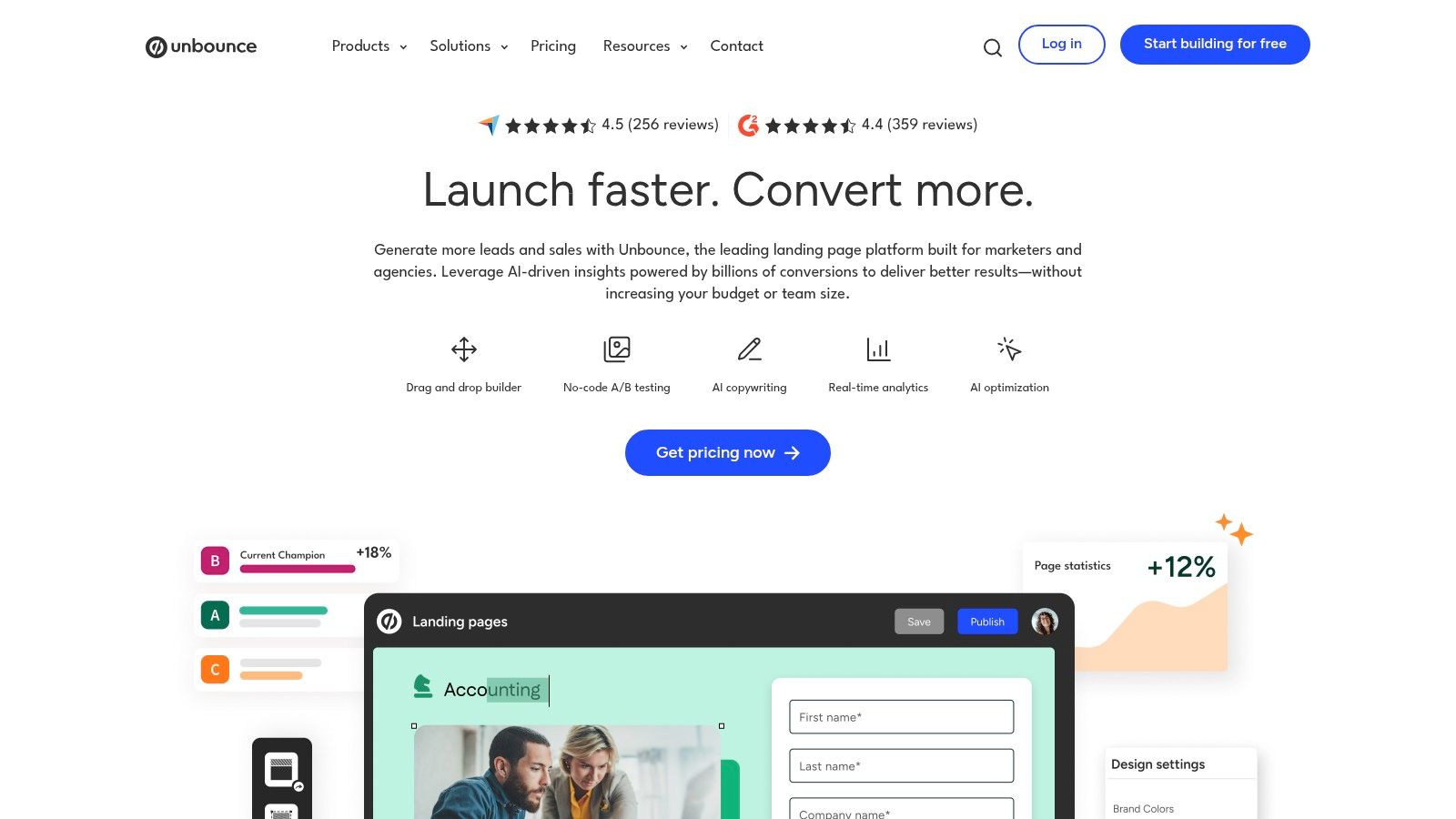
Unlike all-in-one website builders where landing pages are an afterthought, Unbounce focuses exclusively on creating high-performing, standalone pages. Its visual drag-and-drop editor is intuitive, supported by a vast library of mobile-responsive templates that are already structured for optimal user flow. This allows you to go from concept to a live page remarkably fast.
Key Features and Strengths
The true power of Unbounce lies in its experimentation and intelligence features. Built-in A/B testing is seamlessly integrated, allowing you to test variations of headlines, calls to action, or entire page layouts to scientifically improve performance. For higher-tier plans, its AI-powered Smart Traffic feature automatically routes visitors to the page variant they are most likely to convert on, taking the guesswork out of optimisation.
- AI-Assisted Copywriting: The integrated "Smart Copy" tool helps you overcome writer's block by generating high-quality, conversion-focused text for headlines, body paragraphs, and buttons.
- Dynamic Text Replacement: This feature personalises your landing pages by matching the ad copy to the visitor's search query, creating a highly relevant and continuous user experience that boosts quality scores.
- Robust Integrations: With over 1,000 integrations, Unbounce connects effortlessly with your existing marketing stack, from CRMs like HubSpot to email marketing platforms like Mailchimp.
Beyond the landing page builder itself, sourcing high-quality visuals is crucial. To ensure your designs are compelling, explore the top AI image creation tools to find the perfect assets for your page.
While Unbounce is a premium tool with pricing that reflects its advanced feature set, its focus on conversion makes it a worthy investment for teams serious about maximising their return on ad spend. The platform effectively removes technical barriers, empowering marketers to implement best practice landing pages and iterate based on data. To dive deeper into how platforms like this can elevate your campaigns, you can find more insights into how to use Unbounce effectively for better landing page results.
3. Instapage
Instapage is a premium landing page platform engineered for performance marketers and enterprises running large-scale paid advertising campaigns. It moves beyond simple page creation, focusing intently on post-click optimisation to maximise advertising ROI. The platform is built around the core principle of maintaining message match from ad to landing page, ensuring a seamless and highly relevant user journey.
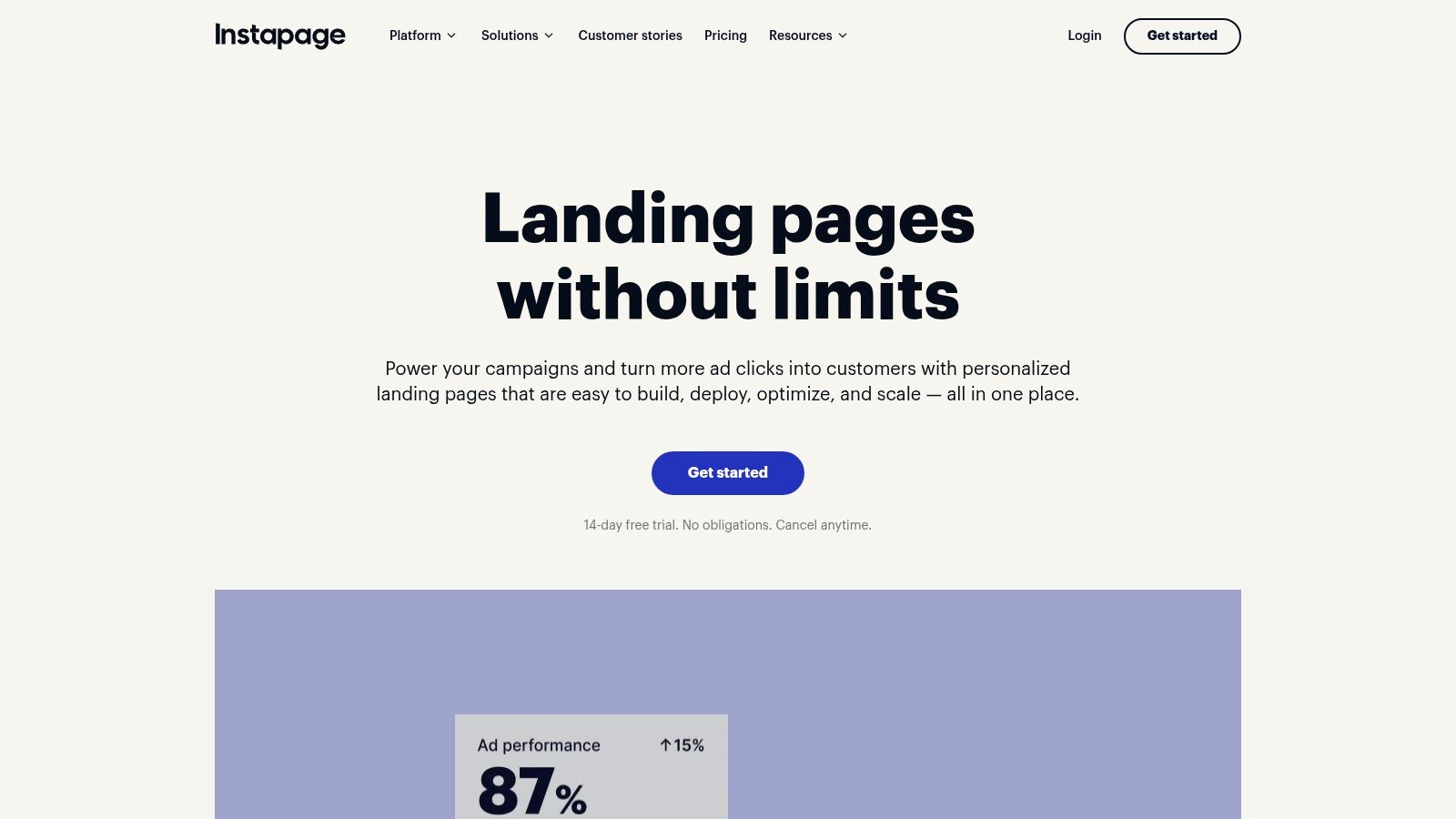
Unlike many all-in-one tools, Instapage’s specialisation is evident in its advanced feature set, which caters to teams needing speed, scale, and granular control. Its robust architecture and focus on server-side experimentation make it a go-to solution for organisations where every incremental lift in conversion rate translates into significant revenue.
Key Features and Strengths
The true power of Instapage lies in its sophisticated optimisation and collaboration tools. Its server-side A/B testing capability eliminates the distracting "flicker" effect common with client-side tools, ensuring a clean user experience and more reliable test data. This is complemented by built-in heatmaps, providing visual data on where users click, scroll, and engage, which is essential for developing hypothesis-driven experiments.
- Ad-to-Page Personalisation: With features like Dynamic Text Replacement, Instapage allows marketers to automatically align landing page copy with the visitor’s search terms or ad creative, dramatically improving relevance and conversion rates.
- Global Blocks & Real-Time Collaboration: For teams managing hundreds of pages, the Global Blocks feature is a game-changer. It allows you to create reusable page sections (like headers, footers, or testimonials) that can be updated once and deployed across all relevant pages simultaneously. Real-time collaboration allows multiple team members to edit and comment on a page at the same time.
- Enterprise-Grade Performance: Instapage is built for reliability and speed, offering Thor Render Engine technology for fast page loads, which is a critical factor for both user experience and ad quality scores. Their plans offer unlimited pages and conversions, with pricing based on visitor volume.
Instapage's pricing structure is geared towards professional and enterprise-level users, making it a higher-cost option compared to tools aimed at small businesses. However, for teams heavily invested in paid media, its ability to scale production and scientifically improve campaign performance justifies the investment. Understanding how to apply these best practice landing pages is particularly crucial in competitive markets, and you can see more specific applications by reviewing how platforms like this are used for powerful SaaS landing pages.
4. Leadpages
Leadpages is a highly accessible landing page and website builder designed for small to medium-sized businesses and entrepreneurs. It prioritises speed and simplicity, empowering users without technical expertise to launch high-converting pages quickly. The platform is built around a philosophy of providing proven conversion patterns directly within its tools, making it an excellent starting point for those looking to implement best practice landing pages without a steep learning curve.
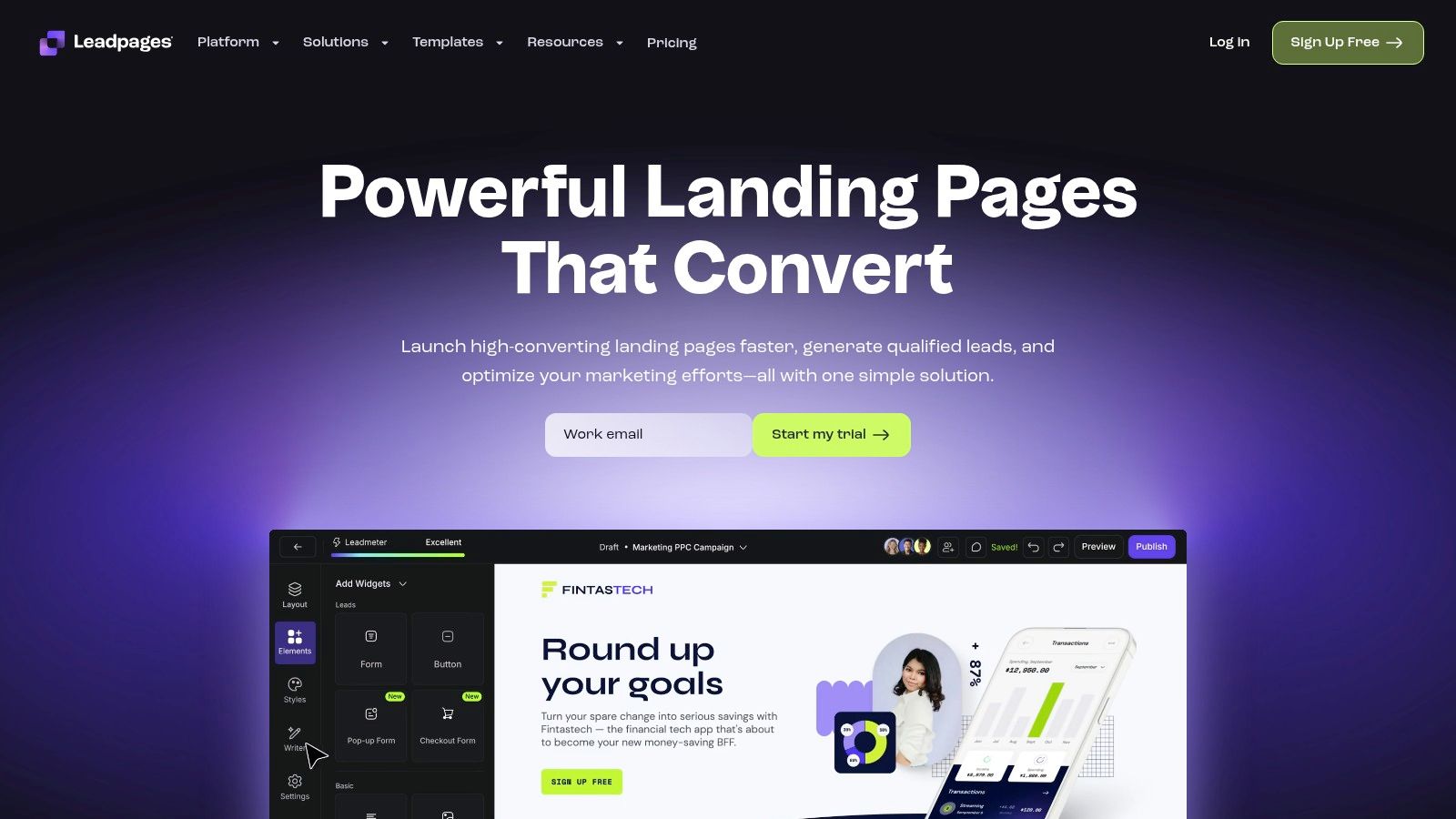
Unlike more complex, enterprise-focused platforms, Leadpages offers a straightforward, no-code drag-and-drop editor and a vast library of modern templates. Its main value proposition is its generous feature set on lower-tier plans, particularly the inclusion of unlimited traffic and leads. This removes a significant barrier to scaling campaigns, allowing businesses to grow without facing sudden cost increases based on their success.
Key Features and Strengths
Leadpages excels by embedding conversion-focused tools directly into an intuitive interface. The platform includes a library of over 250 professionally designed, mobile-responsive templates that are already structured for lead generation, webinar sign-ups, and sales. This focus on ready-made solutions, combined with built-in A/B testing on its standard plan, allows users to quickly deploy and optimise campaigns based on real data.
- Generous Core Features: Even on its entry-level plans, Leadpages provides unlimited traffic, leads, and page publishing, offering significant value and predictability for growing businesses.
- AI-Powered Assistance: The platform incorporates an AI Engine to help users generate compelling headlines, body copy, and even images, streamlining the content creation process.
- Built-in Conversion Tools: Features like pop-ups, alert bars, and integrated payment gateways (via Stripe) are included, enabling users to capture leads and process sales directly from their landing pages.
While its core functionality is robust for lead capture, it's important to remember that the form itself is just one component. Exploring advanced options can significantly improve engagement; you can see a detailed comparison of lead capture solutions by checking out this Google Forms alternative analysis.
For SMBs and solo marketers, Leadpages strikes an excellent balance between powerful features and ease of use. While it may lack the advanced personalisation and analytics of premium competitors, its focus on core conversion optimisation practices makes it a formidable tool for achieving marketing goals efficiently.
100% Free Lead Magnet Audit
Our AI analyzes your website and delivers custom growth strategies in seconds.
5. ThemeForest (Envato Market)
For teams that prefer to manage their own hosting or want a design head start without being tied to a specific platform, ThemeForest offers a vast marketplace of landing page templates. It's an excellent resource for sourcing professionally designed, conversion-oriented layouts that can be purchased with a one-time licence, providing a cost-effective alternative to building from scratch or paying recurring platform fees. The marketplace caters to a wide range of needs, from standalone HTML templates to themes for WordPress and even files for dedicated builders.
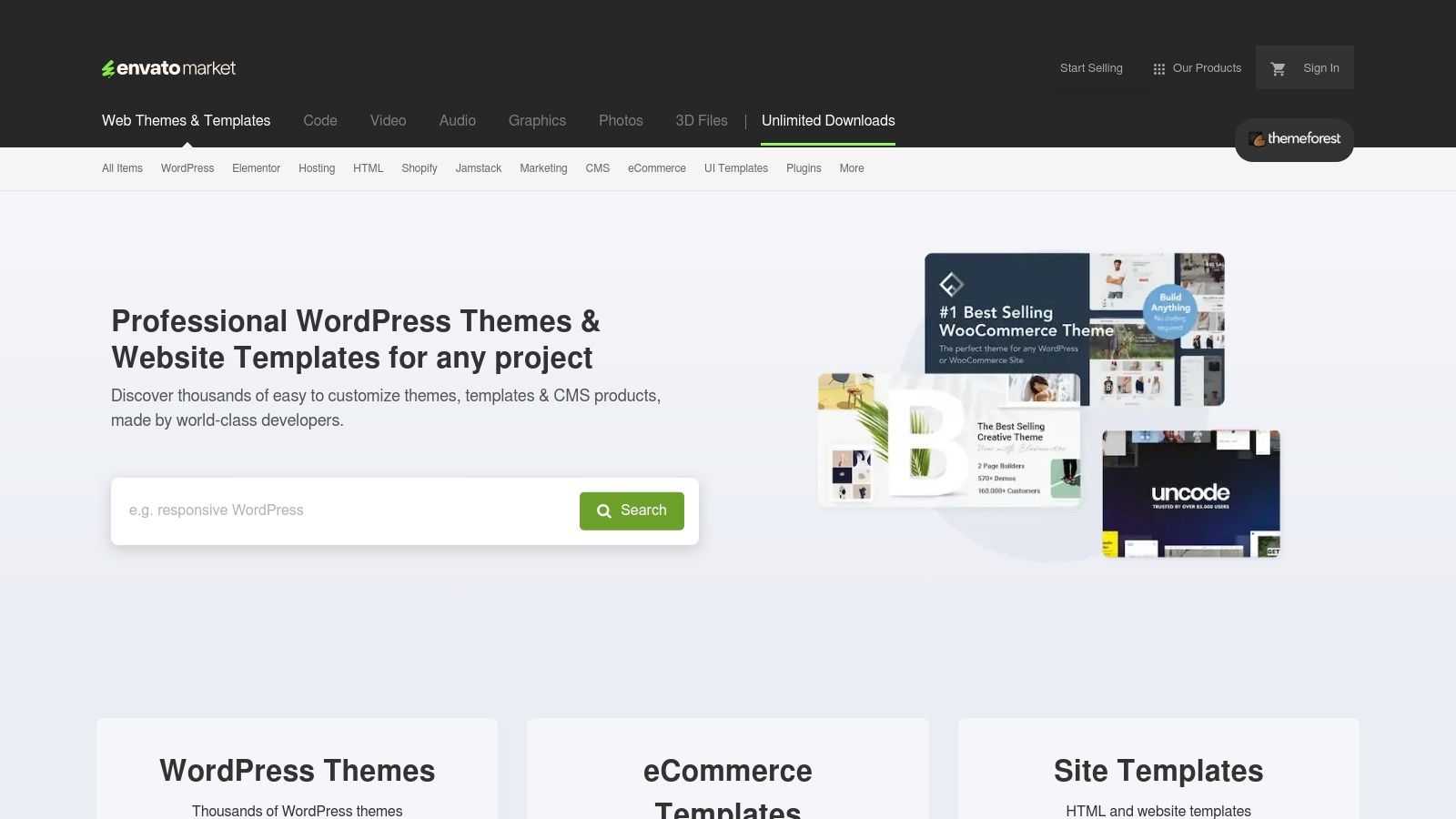
Unlike all-in-one builders, ThemeForest acts as a library where you can acquire the design assets and code directly. This approach gives you full control over customisation and hosting, which is ideal for developers or marketers with technical resources. The sheer volume and variety of options available mean you can almost always find a template tailored to your specific industry, whether it's for a SaaS launch, a local service, a webinar registration, or an e-commerce product.
Key Features and Strengths
The primary strength of ThemeForest is the immense choice it provides, allowing you to find a design that already incorporates best practice landing pages principles. Many templates are built with clear visual hierarchy, compelling call-to-action sections, and social proof elements already in place. The ability to preview live demos is crucial, as it lets you experience the user flow and responsiveness before making a purchase.
- Broad Template Variety: Find layouts designed for virtually any use case, including product launches, app showcases, lead generation funnels, and event promotions.
- Dedicated Builder Templates: Beyond simple HTML, you can find templates specifically designed for platforms like Unbounce, allowing you to import a unique, premium design directly into your favourite builder.
- One-Time Cost: Most templates are available for a single payment, making it a budget-friendly option to secure a high-quality design without ongoing subscriptions.
- Author Ratings and Support: The marketplace model includes user reviews, sales data, and author support, helping you gauge the quality and reliability of a template before you buy.
While ThemeForest provides an excellent starting point for design, remember that the template is just the foundation. You still need to implement your own analytics, form integrations, and hosting. It is crucial to check the template's last update date and reviews to ensure it follows modern coding standards. The flexibility is a major advantage, but it comes with the responsibility of managing the technical backend yourself, unless you're using the templates designed for a specific builder.
6. OMR Reviews
For businesses targeting a global audience, understanding regional preferences can be a major advantage. While not a builder itself, a platform like OMR Reviews serves as a critical research and procurement layer, offering detailed user reviews and feature comparisons for tools relevant to various markets. It helps marketers make informed decisions based on peer experiences.
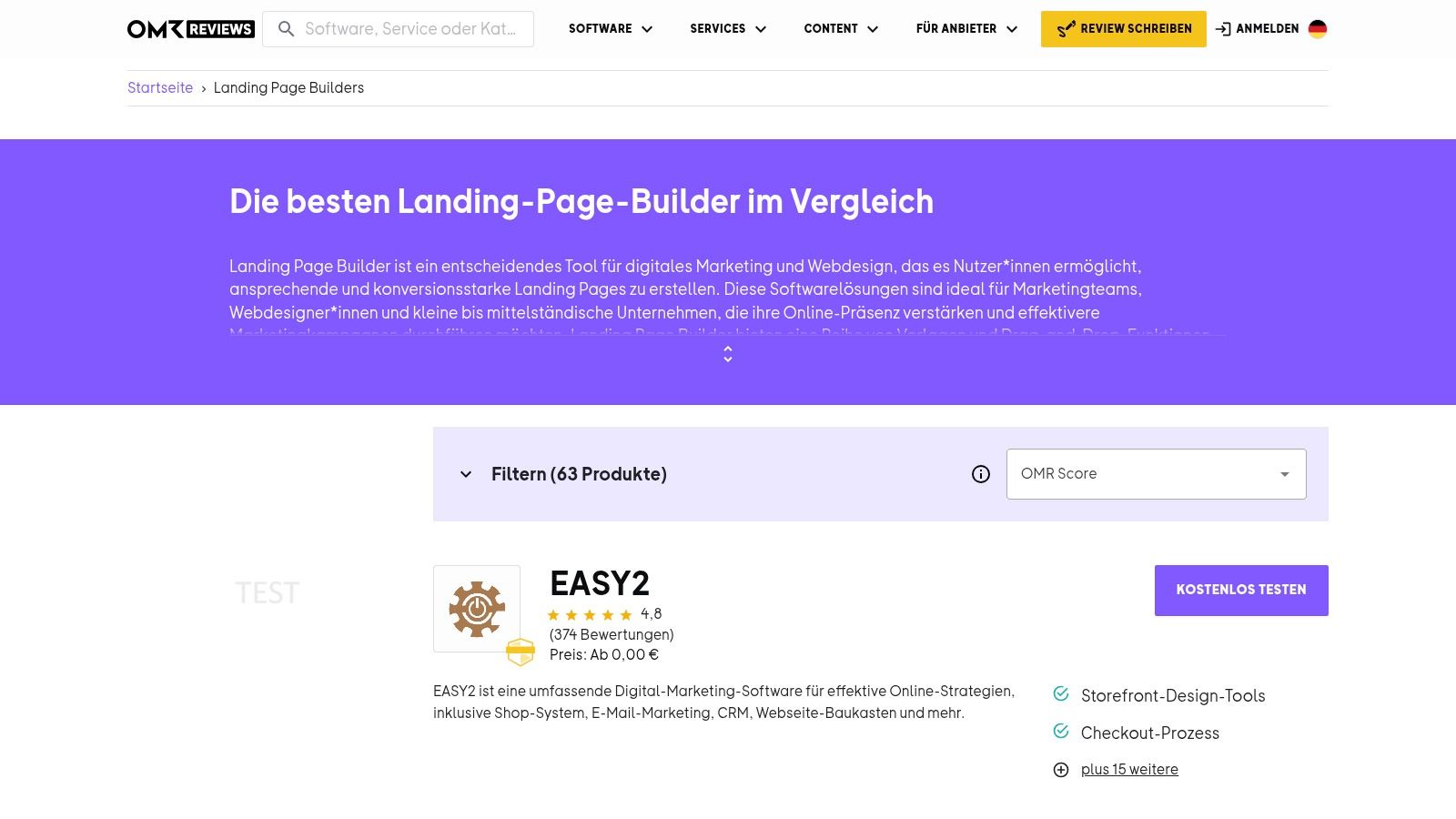
Unlike some global review sites that can feel generic, specialized portals help teams navigate the market by explaining typical landing page features, showing side-by-side comparisons, and providing direct links to vendor trials. This is invaluable for gaining stakeholder buy-in and ensuring a chosen platform aligns with business practices and compliance standards in key regions.
Key Features and Strengths
The core value of review platforms like OMR lies in their curated and specific content. They allow users to quickly shortlist top contenders like Unbounce, Leadpages, and HubSpot based on authentic feedback from their peers. The platform organises tools into clear categories, making it easy to identify solutions that meet your specific needs for creating best practice landing pages.
- Authentic User Reviews: Gain access to genuine user reviews, offering an unfiltered look at a tool's performance, customer support, and true value within different markets.
- Side-by-Side Comparisons: The platform presents clear comparisons of features and pricing snippets, accelerating the shortlisting process before committing to free trials or demos.
- Educational Content: Curated category pages provide foundational knowledge on what to look for in a landing page builder, educating teams on key functionalities.
While a review site is an excellent starting point for research, remember that pricing information can sometimes lag behind vendors' latest offers, so it's always best to verify on the official sites. The platform serves as an essential educational resource, streamlining the often-complex process of software procurement for marketing teams. Its focus on user-generated insights ensures you select a tool that is not only powerful but also a good operational fit.
7. Amazon (Books & Kindle)
Let's be real: tools are only as good as the strategy behind them. Mastering the fundamental principles of persuasion, psychology, and structure is what truly separates good landing pages from great ones. For this, books remain an unparalleled resource. Amazon serves as a vast digital library for marketers and founders looking to build a solid foundation in conversion rate optimisation (CRO), UX writing, and A/B testing through structured, long-form learning from recognised authors.
Unlike a fleeting blog post, a well-chosen book provides a comprehensive framework for creating best practice landing pages. The platform excels by offering an extensive collection of both foundational and cutting-edge literature on the subject. With options ranging from paperback and hardcover to instant-access Kindle versions and audiobooks, it caters to every learning preference, making deep knowledge accessible.
Key Features and Strengths
The primary strength of using Amazon for learning is the sheer breadth of its catalogue combined with social proof. You can find seminal works on CRO alongside niche guides on psychological triggers, all vetted by a global community of readers. The customer ratings and detailed reviews are particularly useful, offering insights into a book’s practical value and helping you avoid outdated theories in a rapidly evolving field. This peer-review system helps you curate a reading list that delivers real-world results.
- Broad Selection: Access a massive repository of literature on landing pages, user experience, and conversion, often with multiple formats available for a single title.
- Customer Ratings and Reviews: Leverage reviews from other marketing professionals to gauge a book’s relevance and practicality before you commit to buying it.
- Multiple Formats and Sellers: Choose from new paperbacks, budget-friendly used copies, or get instant access with the Kindle e-book version, which is perfect for immediate learning.
- Reliable Fulfilment: Benefit from robust logistics for fast delivery options and a straightforward returns process if a book doesn't meet your expectations.
While Amazon provides the knowledge, putting that knowledge into practice is key. One critical area is the lead magnet offered on your landing page. To ensure your offer is as compelling as your page design, you can use our free Magnethive lead magnet audit to analyze its effectiveness, generate a comprehensive report, and get three AI-powered ideas for improvement. This combination of foundational knowledge from books and practical analysis tools creates a powerful optimisation loop.
Top 7 Best-Practice Landing Page Comparison
| Item | Implementation complexity 🔄 | Resource requirements ⚡ | Expected outcomes 📊 | Ideal use cases 💡 | Key advantages ⭐ |
|---|---|---|---|---|---|
| Interactive LeadGen Blog | 🔄 Moderate–High — tactical blueprints but need development & integration | ⚡ Developer/engineering time, analytics & marketing ops; templates reduce ramp | 📊 High — case studies report 40–55% on-page conversion; improved lead quality (~3x) | 💡 Demand-gen, agencies, PLG teams building quizzes/assessments/audits | ⭐ End-to-end blueprints, templates, zero-party data capture, sales-qualification routing |
| Unbounce | 🔄 Low — visual drag‑and‑drop; built for fast launches | ⚡ Minimal dev; subscription & integrations; testing workflows | 📊 Good — rapid launch + systematic A/B testing improves CRO | 💡 Marketers/agencies needing fast pages and structured experimentation | ⭐ Speed to publish, robust testing, large integrations ecosystem |
| Instapage | 🔄 Low–Medium — visual builder plus advanced server-side testing | ⚡ Higher-cost subscription; CRO team and paid-media volume recommended | 📊 High for paid campaigns — server-side A/B and personalization boost post-click performance | 💡 Brands running high-volume paid acquisition and collaborative teams | ⭐ Server-side testing, heatmaps, advanced personalization, team collaboration |
| Leadpages | 🔄 Low — SMB-friendly editor and templates | ⚡ Low to moderate subscription; minimal technical skills required | 📊 Good for SMBs — unlimited traffic/leads on lower tiers supports growth | 💡 Small teams, solo founders wanting simple, fast CRO patterns | ⭐ Strong value for SMBs, many templates, coaching/resources |
| ThemeForest (Envato) | 🔄 Variable — template import/customization needs technical work | ⚡ One-time purchase; hosting and developer/time to customize | 📊 Variable — professional designs quickly available; outcome depends on implementation | 💡 Teams seeking cost-effective starter designs or Unbounce-compatible templates | ⭐ Broad variety, cost-effective start vs. custom design |
| OMR Reviews | 🔄 Very Low — comparison & research portal (no building) | ⚡ Minimal (time to research); useful for procurement workflows | 📊 Moderate — speeds shortlist/decision-making for global buyers | 💡 Buyers shortlisting landing-page builders using peer reviews | ⭐ Region-specific reviews, side-by-side comparisons, vendor trial links |
| Amazon (Books & Kindle) | 🔄 Very Low — content consumption for learning | ⚡ Purchase/reading time and modest cost (books/Kindle) | 📊 Moderate — foundational knowledge in CRO, UX writing, A/B testing | 💡 Individuals or teams upskilling on landing pages and CRO best practices | ⭐ Wide selection, fast delivery/Kindle instant access |
From Page to Pipeline: Your Next Move
Crafting a high-performance landing page is less about blindly following a checklist and more about adopting a strategic mindset. Throughout this guide, we have explored a variety of tools and platforms, from versatile builders like Unbounce and Instapage to resource hubs like Amazon and OMR Reviews. The common thread is that successful landing pages are built on a foundation of genuine value exchange, clear communication, and relentless user-centric optimisation.
The journey from a blank canvas to a conversion machine requires moving beyond the static, one-way pitch. Instead of just telling visitors what you do, you must show them the value you can provide, instantly. This is where the power of interactivity truly shines. An interactive calculator, for instance, transforms a passive reading experience into an active engagement, solving a small problem for your visitor on the spot and building trust long before a sales conversation begins.
Key Takeaways for High-Converting Landing Pages
To synthesise what we've learned, remember these core principles:
- Prioritise Value Over Pitch: Your primary goal should be to help, not to sell. A visitor who receives immediate, tangible value is far more likely to convert than one who only sees a sales pitch. This principle is central to creating best practice landing pages.
- Embrace Interactivity: Move away from static PDFs and generic lead magnets. Interactive tools, quizzes, and calculators provide personalized results and a memorable experience, significantly boosting engagement and lead quality. Even a simple interactive tool can become a powerful engine for generating traffic and qualified leads.
- Test Relentlessly: Your first draft is never your final version. Use the A/B testing features in platforms like Leadpages or Unbounce to experiment with headlines, calls-to-action, imagery, and page layouts. Data, not assumptions, should guide your decisions.
- Clarity is King: A confused visitor will never convert. Ensure your value proposition is crystal clear, your copy is concise, and your call-to-action is unmissable. Every element on the page must serve a single, unified purpose.
Your Actionable Next Steps
Feeling overwhelmed? Don't be. The key is to start small and build momentum. If you are unsure where your current lead generation efforts stand or how they measure up against modern best practice landing pages, a quick diagnostic can provide the clarity you need.
Before you invest time and resources into a complete overhaul, understanding your baseline is crucial. If you're looking for a starting point, consider analysing your current lead magnet's effectiveness.
Ultimately, the perfect landing page is a myth. The most effective one is a living asset that you continuously refine. Take the principles we have discussed, choose a tool that fits your team's skills and budget, and commit to the iterative process of building, testing, and learning. Your pipeline will thank you for it.