7 Fun Personality Quizzes for Smarter Marketers
Discover 7 fun personality quizzes that reveal audience insights, spark engagement, and sharpen marketing strategy.

Are you tired of pouring resources into PDF guides and webinars that just don't get the traction you need? It's a frustrating cycle. Your static content gets lost in the noise, failing to turn visitors into qualified leads. In a world saturated with generic content, interactive experiences like fun personality quizzes offer a powerful way to cut through, engage your audience on a deeply personal level, and drive real business outcomes. These aren't just fluffy entertainment; they are sophisticated marketing engines disguised as fun.
This article moves beyond a simple list. We'll dissect seven standout examples of fun personality quizzes, revealing the specific strategies that make them so effective. You will learn how they are engineered to not just entertain, but to segment audiences, capture high-quality leads, and provide genuine value. If you're looking to elevate your marketing, understanding how to create engaging content that gets results is crucial, and quizzes are a masterclass in this discipline.
For each example, we'll provide a comprehensive breakdown, complete with screenshots and direct links, focusing on:
- Scoring Mechanisms: How results are calculated and personalised.
- Segmentation Tactics: The methods used to categorise users for targeted follow-ups.
- UX/UI Design: The design choices that boost completion rates.
- Lead-Capture Integrations: How they seamlessly convert engagement into leads.
This isn't a theoretical guide. It's a practical playbook filled with actionable insights and replicable strategies you can apply to your own marketing. By the end, you'll have a clear understanding of how to build or leverage personality quizzes to generate better leads and create content that your audience genuinely enjoys.
1. 16Personalities
When you think of "fun personality quizzes", there's a high probability 16Personalities is the first platform that comes to mind. It has become the internet's gold standard for accessible, MBTI-style personality assessments, known for its clean user interface, charming character illustrations, and incredibly shareable results. It’s the quiz friends send each other to compare notes, and it has masterfully turned a complex psychological framework into a digestible and engaging experience.
The core offering is its free "NERIS Type Explorer®" test, which takes about 10-15 minutes to complete. Users answer a series of questions on a sliding scale, which then categorises them into one of 16 distinct personality types, like "Advocate" (INFJ) or "Mediator" (INFP). This is where its brilliance as a top-of-funnel tool shines. It’s fast, free, and delivers instant, high-value gratification.
Strategic Analysis & Breakdown
16Personalities excels by using a freemium model built on a foundation of massive organic reach. The initial quiz and basic results pages are free, which lowers the barrier to entry to zero. This approach has allowed them to build a colossal user base and brand recognition that few can match.
Key Strategy: The platform leverages the inherent virality of personality types. People love to understand themselves and share their identity with others. By assigning memorable names and avatars (e.g., "The Commander," "The Entertainer"), they've created a shareable social object, not just a clinical result.
Lead capture and monetisation are handled subtly. After receiving your free results, you are presented with multiple opportunities to upgrade for deeper insights. The platform segments users based on their interest in personal growth or professional development, offering paid products like a Career Suite or a more comprehensive Pro Suite. This model respects the user's initial intent (a free quiz) while effectively upselling to those who want more. You can dive deeper into how this kind of personality assessment tool works and its underlying mechanisms.
Unique Offerings & Takeaways
What sets 16Personalities apart is its polish and brand authority. The UX is flawless, guiding users effortlessly from the first question to their results page.
- User Experience (UX): The interface is clean, mobile-friendly, and uses a progress bar to keep users engaged. The language is encouraging and avoids overly academic jargon.
- Monetisation: They offer tiered premium content, including a Career Suite (~99), as well as team-focused packages for businesses. This allows them to serve both B2C and B2B audiences.
- Community: Its widespread adoption means there is a huge community of users, making it easy to find articles, videos, and discussions related to your type.
For marketers, the key takeaway is the power of a well-executed freemium interactive tool. By providing genuine value upfront, 16Personalities builds trust and creates a natural pathway for users to opt into paid, premium content. It’s a masterclass in turning a fun, simple quiz into a sustainable business model.
2. Truity
If 16Personalities is the gateway drug to personality tests, Truity is the well-stocked library for those who want to explore further. Positioned as a more scientifically grounded alternative, Truity offers a wide catalogue of fun personality quizzes that cater to both casual users and those seeking deeper psychological insights. It strikes a balance between engaging, shareable content and research-backed assessments like the Big Five and the Enneagram.
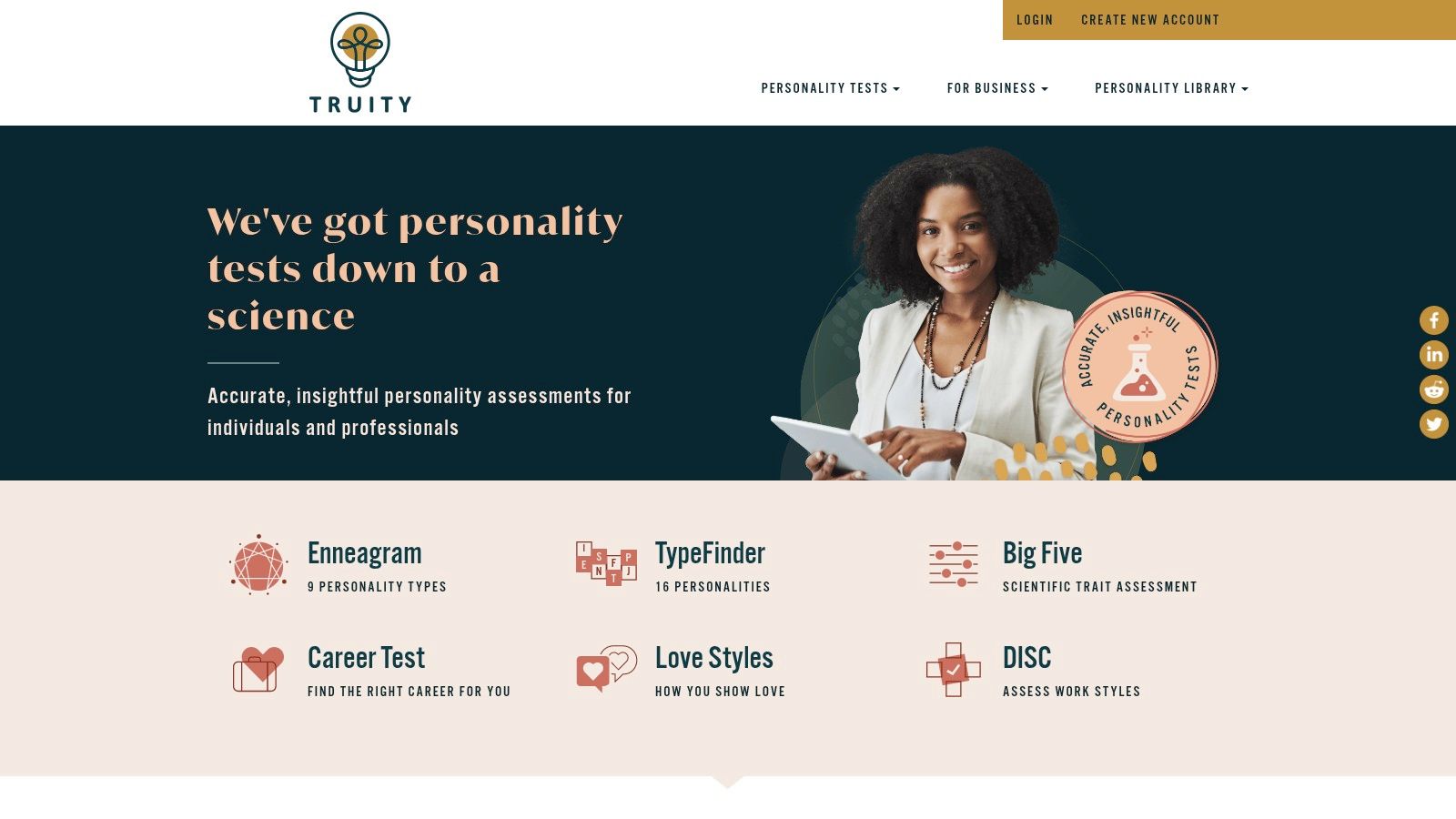
Truity’s model is built on providing a variety of tests, such as its popular "TypeFinder®" for Myers-Briggs types, the Enneagram test, and even a DISC assessment. Most tests offer a free, "basic" report that gives you a solid overview of your results. This immediate gratification is crucial, as it provides real value upfront before presenting the option to purchase a comprehensive, detailed report.
Strategic Analysis & Breakdown
Truity’s strategy is diversification and authority. By offering a broad portfolio of well-regarded personality frameworks, they capture a wider audience than a single-test platform. They appeal to users who have already tried MBTI and are now curious about other models like the Big Five or Enneagram, effectively capturing second-wave interest.
Key Strategy: Truity uses a "value-gated" freemium model. Unlike a simple lead magnet, the free basic report is a substantial product in itself. This builds trust and demonstrates the quality of their full reports, making the paid upgrade feel like a natural next step for genuinely interested users rather than a forced transaction.
Their lead capture is integrated directly into the value exchange. To get your free results, you provide an email, and the platform then uses this to market the paid reports and related content. This is a classic, effective strategy that respects the user journey: provide value first, then ask for the conversion. They successfully turn a one-off quiz into a potential long-term customer relationship by offering a clear path to deeper learning.
Unique Offerings & Takeaways
What sets Truity apart is its blend of accessibility and scientific credibility. The platform is designed to feel trustworthy, citing research and providing detailed explanations for its methodologies, which appeals to a more discerning audience.
- User Experience (UX): The site is straightforward and academic in its presentation. It provides clear time estimates and descriptions for each test, allowing users to choose the right assessment for their needs.
- Monetisation: The core model is selling in-depth reports, typically ranging from 29. They also have a strong B2B offering with bulk pricing for teams and organisations, opening up a lucrative corporate wellness and development market.
- Variety: The sheer number of available tests is a key differentiator. Users can explore everything from their "Big Five" traits to their career-oriented Holland Code, making it a one-stop-shop for self-discovery.
For marketers, Truity demonstrates the power of a tiered content strategy. By offering a valuable but incomplete free product, they create a powerful incentive for users to upgrade. It’s a lesson in how to monetise expertise without alienating the top of your funnel. This approach proves that interactive tools don't have to be entirely free to generate leads and drive significant revenue.
3. BuzzFeed Quizzes
If 16Personalities is the thoughtful, introspective end of the personality quiz spectrum, BuzzFeed is its chaotic, pop-culture-obsessed sibling. For years, BuzzFeed Quizzes has been the internet's premier destination for quick, lighthearted, and outrageously specific personality tests. It has perfected the art of the viral quiz, turning simple questions into a social phenomenon centred around identifying with everything from a Disney princess to a specific type of bread.
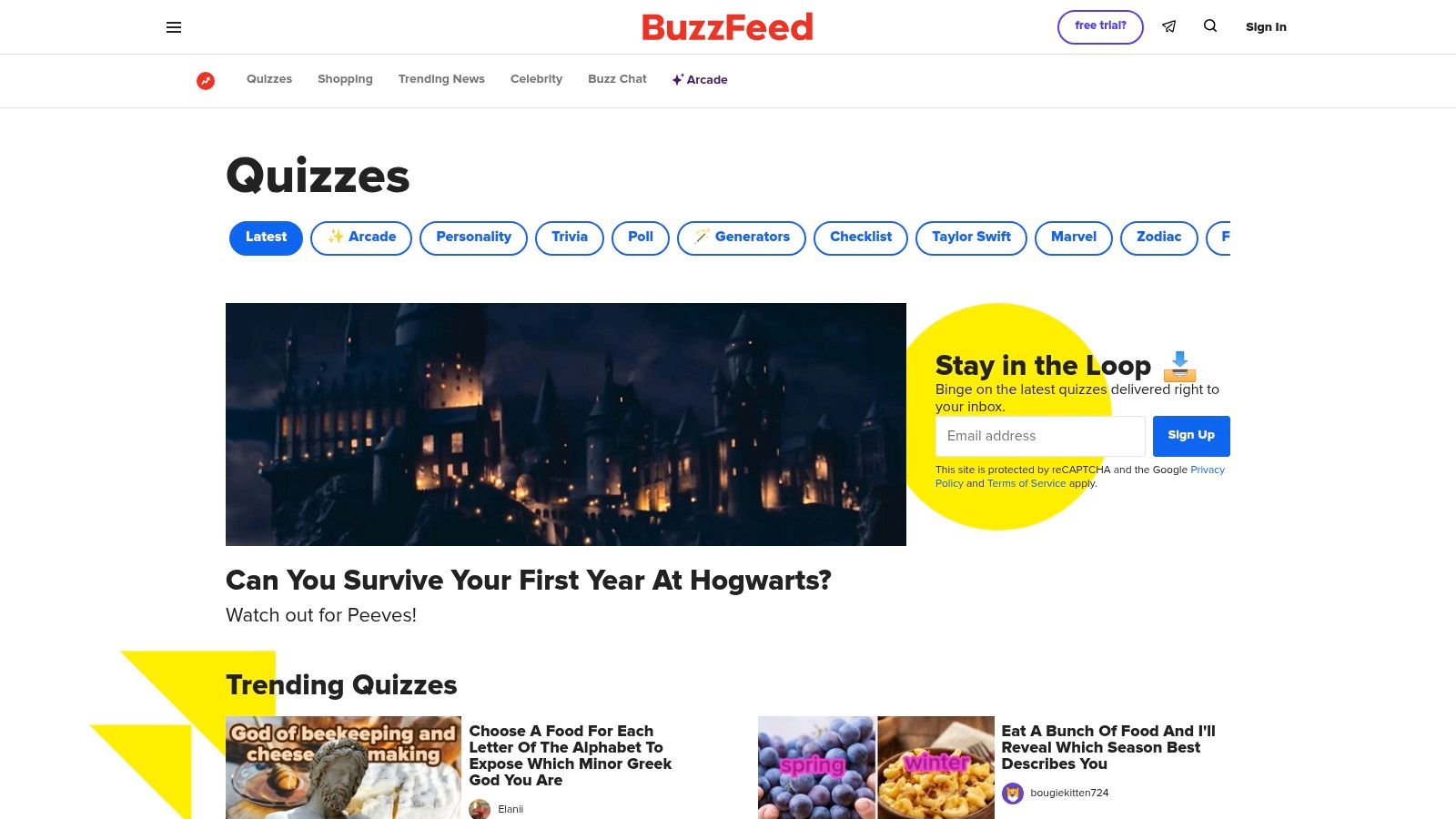
The platform’s strength lies in its sheer volume and cultural relevance. Users can spend hours diving into quizzes like "Which 'Bridgerton' Character Are You Really?" or "We Know Your Favourite Colour Based On The House You Design". These aren't meant for deep psychological insight; they are designed for instant gratification, shareability, and a bit of fun with friends. The quizzes are free, incredibly fast to complete, and available on both the web and a dedicated mobile app.
Strategic Analysis & Breakdown
BuzzFeed's model is entirely ad-supported, built on a foundation of generating massive, repeatable traffic through highly shareable content. The quizzes are not lead magnets in a traditional B2B sense; they are the core product, designed to maximise page views, time on site, and social media engagement. This high-volume traffic is then monetised through display advertising and sponsored content.
Key Strategy: The platform thrives on "identity affirmation" tied to trending pop culture. By connecting a user's choices to a well-known character, show, or meme, BuzzFeed creates a powerful emotional hook. The result isn't just a data point; it's a social badge that people are eager to share, driving an endless cycle of organic traffic.
Unlike platforms focused on lead capture, BuzzFeed’s primary goal is engagement. The quiz experience is engineered for maximum virality, with prominent social sharing buttons and results that are easily digestible and perfect for a tweet or Instagram story. The strategy is simple: create fun, low-commitment interactive content that people can't resist sharing, then monetise the resulting audience. You can explore how various online quiz makers facilitate this kind of engagement-focused strategy.
Unique Offerings & Takeaways
What makes BuzzFeed a fixture in the world of fun personality quizzes is its relentless focus on entertainment and relevance. It has its finger on the pulse of pop culture, churning out new quizzes daily that tap into current trends.
- User Experience (UX): The interface is bright, image-heavy, and optimised for mobile scrolling. The quiz formats are simple, typically using multiple-choice questions with images, making them fast and visually engaging, though the web pages can be heavy with ads.
- Monetisation: The platform is free for users. Revenue is generated primarily through programmatic advertising and branded quizzes, where companies partner with BuzzFeed to create sponsored content that aligns with their brand.
- Content Library: Its library is enormous and constantly growing, covering nearly every imaginable pop culture niche. This ensures there's always something new and relevant for users to discover and share.
For marketers, BuzzFeed is a powerful lesson in the value of top-of-funnel engagement. It demonstrates that interactive content doesn't always need a complex lead capture form to be valuable. By creating genuinely fun experiences, you can build a massive audience and brand affinity, which can be monetised in other ways. It proves that sometimes, the best strategy is simply to be the most entertaining option available.
4. uQuiz
If 16Personalities represents the polished, mainstream side of fun personality quizzes, uQuiz is its chaotic, creative, and endlessly entertaining indie counterpart. This platform is entirely user-generated, functioning as a massive public library where anyone can create and share their own quizzes. It thrives on internet culture, memes, and hyper-specific niches, making it the go-to destination for quizzes that feel personal, quirky, and incredibly shareable among friend groups.
uQuiz is where you'll find gems like "what cursed image are you" or quizzes tailored to specific fandoms and inside jokes. Its raw, uncurated nature is its biggest strength, offering a stark contrast to professionally developed assessments. There’s no complex psychological framework here; it's pure, unadulterated fun driven by community creativity, making it a vibrant hub for self-expression and social engagement.
Strategic Analysis & Breakdown
uQuiz's strategy is built on complete user empowerment and network effects. By providing a free and incredibly simple quiz-maker, it has outsourced content creation to its community. This approach eliminates the need for an in-house content team and ensures a constant, ever-evolving stream of relevant, trend-driven quizzes that a corporate entity could never replicate.
Key Strategy: The platform capitalises on the desire for personalised and niche content. While a major brand might create a broad "What kind of leader are you?" quiz, a uQuiz creator makes "which character from this obscure 90s TV show are you?" The latter is far more shareable within its target subculture, driving organic, word-of-mouth growth.
The monetisation model is non-intrusive, relying on display advertising rather than freemium upgrades or lead capture. This keeps the barrier to both creating and taking quizzes at absolute zero, prioritising user growth and engagement above all else. Its primary goal is traffic, and its user-generated content engine is exceptionally effective at delivering it.
Unique Offerings & Takeaways
What makes uQuiz so distinct is its authentic, grassroots feel. It’s a tool for connection and entertainment, not for deep psychological analysis, and it leans into this identity perfectly.
- User Experience (UX): The interface is basic and functional, prioritising ease of creation over aesthetic polish. This simplicity is key, as it makes the quiz-building process accessible to everyone, regardless of technical skill.
- Monetisation: The platform is free to use for both creators and quiz-takers, supported entirely by on-page advertisements. There are no paywalls or premium features, ensuring universal access.
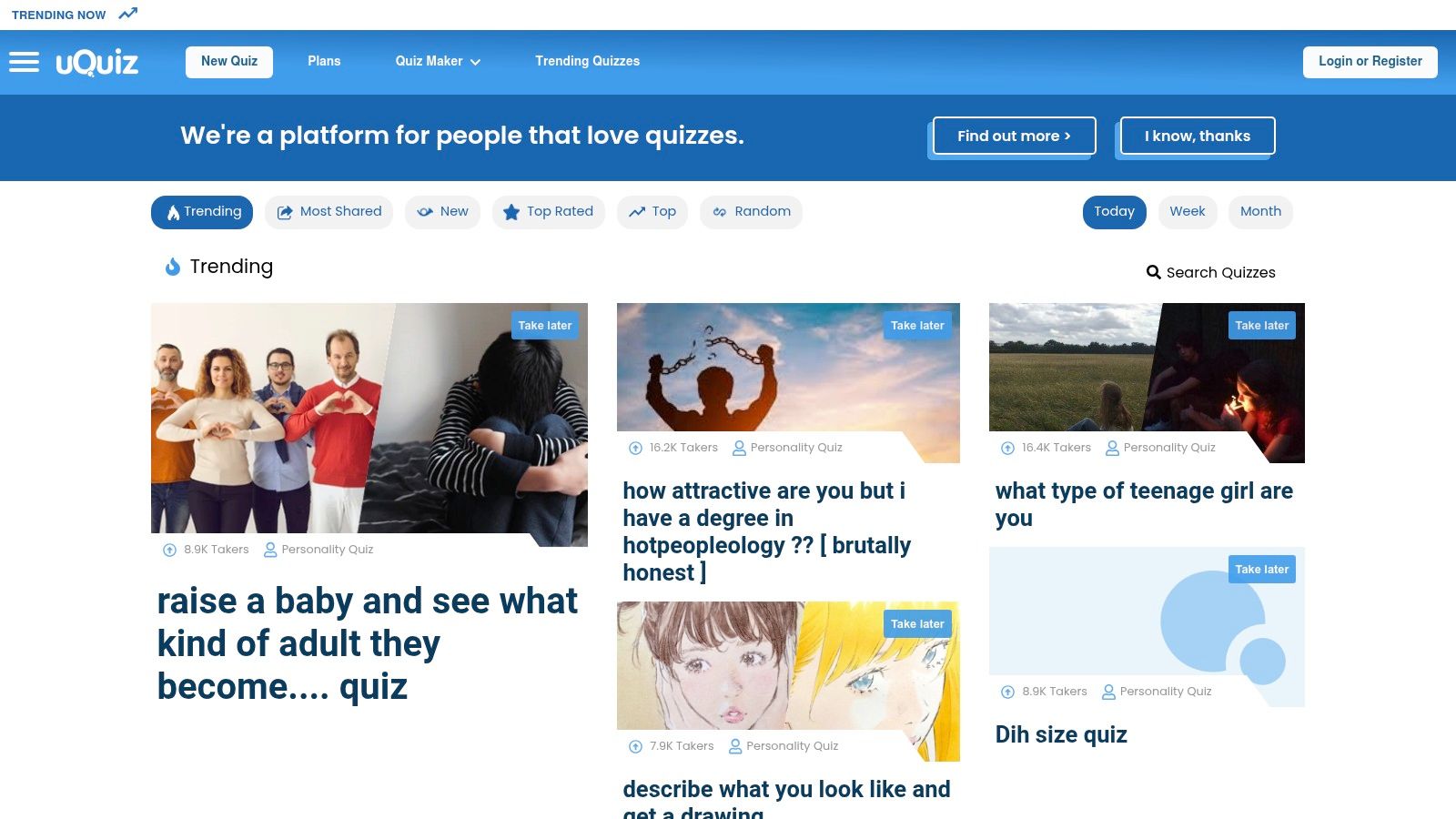
- Community: Its strength is its community. The "Trending" page acts as a real-time gauge of internet culture, showcasing what topics and formats are currently resonating with a younger, digitally native audience.
For marketers, uQuiz is a fascinating case study in the power of user-generated content (UGC). It demonstrates that a platform can achieve massive organic reach by simply providing the tools for a community to create and share. The key takeaway is that authenticity and niche relevance can often outperform high-production value, especially when the goal is viral social sharing.
100% Free Lead Magnet Audit
Our AI analyzes your website and delivers custom growth strategies in seconds.
5. Queendom (PsychTests)
Queendom, powered by PsychTests, feels like the internet's original, vast library of psychological exploration. While some platforms focus on one core quiz, Queendom offers a sprawling catalogue that ranges from scientifically-backed assessments to a dedicated "Fun Tests & Quizzes" section. It's a platform that successfully bridges the gap between serious psychometric tools and lighthearted, fun personality quizzes, making it a unique destination for both deep self-discovery and casual entertainment.
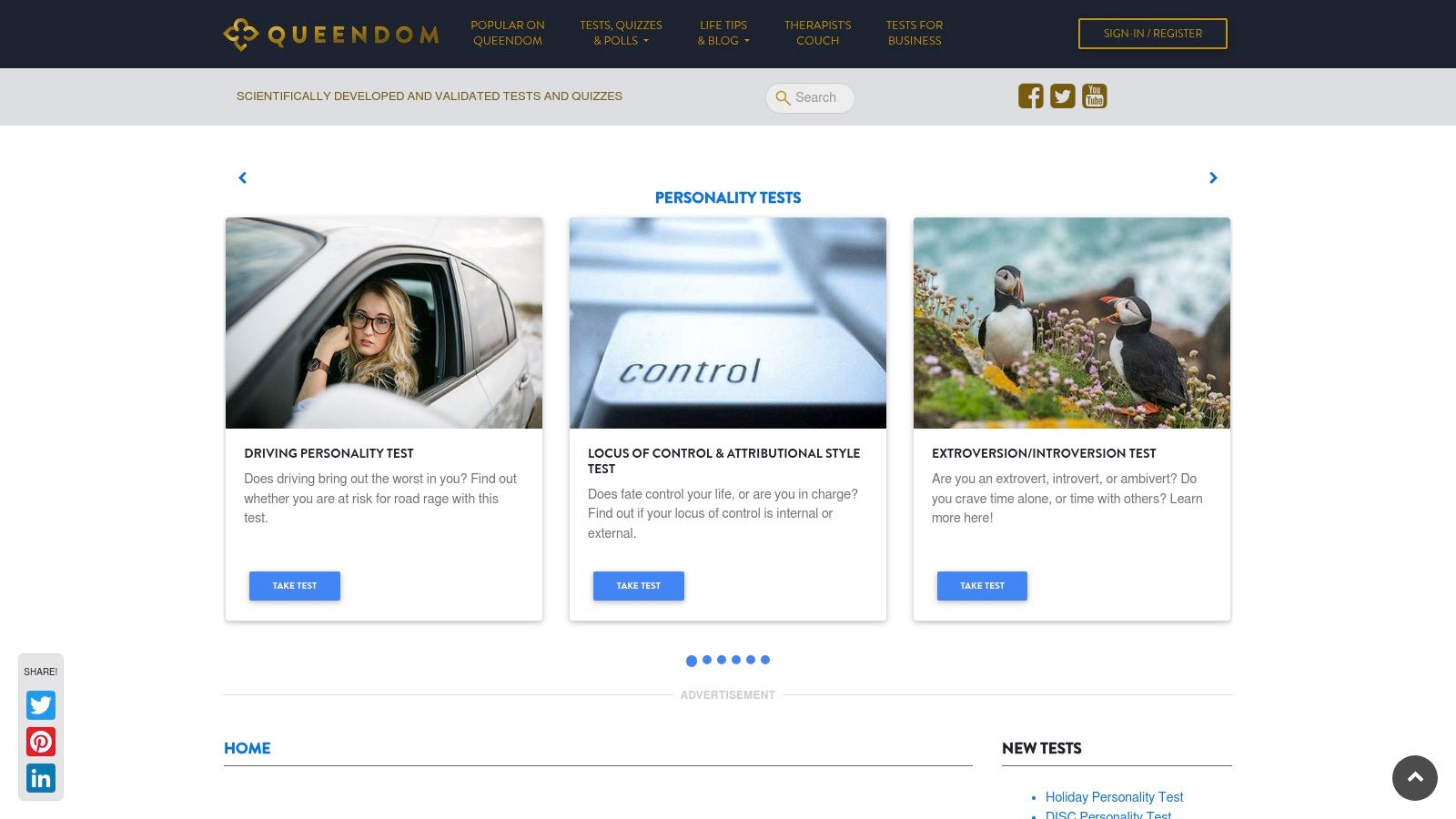
The user journey typically begins with a free quiz, which provides a valuable "snapshot" of the results. This initial taste is often enough for casual users, but for those seeking more, Queendom offers paid, comprehensive reports. This model is transparent from the start, clearly explaining what is free and what requires an upgrade, building user trust.
Strategic Analysis & Breakdown
Queendom’s strategy revolves around content breadth and a tiered access model. By offering hundreds of quizzes covering personality, relationships, career, and lifestyle, they cast an incredibly wide net, capturing search traffic for countless niche topics. This volume approach ensures there's a quiz for nearly any query, from a serious IQ test to a "Procrastination Test".
Key Strategy: The platform uses a "content-as-a-funnel" approach. The massive library of free-to-start quizzes acts as the top of the funnel, drawing in organic traffic. The "snapshot" result provides instant value, and a clear call-to-action then funnels genuinely interested users toward a paid, premium report for deeper analysis.
This model is a classic example of providing value first. A user interested in their relationship dynamics might take a free quiz on attachment styles and, upon seeing the quality of the initial feedback, feel compelled to purchase the full report for actionable advice. You can explore how an attachment style quiz works and its potential for lead generation. This turns a simple quiz into a direct revenue driver and a qualified lead for their other products.
Unique Offerings & Takeaways
What makes Queendom stand out is its dual identity as both a serious psychometric provider and a hub for fun personality quizzes. This is backed by decades of experience, giving even their "fun" tests a sense of credibility.
- User Experience (UX): While some parts of the interface feel dated compared to newer platforms, it is straightforward and functional. The clear separation between free and paid content manages user expectations effectively.
- Monetisation: Queendom's primary model is selling detailed PDF reports (typically ~$10-15) for individual tests or offering unlimited access packages. This direct B2C sales model is simple and effective.
- Credibility: As the public-facing side of PsychTests, the platform benefits from an underlying foundation of psychological research and test development, which adds a layer of authority.
For marketers, Queendom demonstrates the power of a deep content library. Instead of relying on a single blockbuster tool, they have built a sustainable model by serving numerous niche interests. The key takeaway is that offering a high-value "snapshot" for free can be a powerful and ethical way to upsell a more comprehensive, premium product. It respects the user's initial intent while creating a clear path to monetisation for the most engaged segment of the audience.
6. Etsy (Printable Personality Quizzes and Party Games)
While most fun personality quizzes have moved online, there's a unique and thriving niche for tangible, printable versions, and Etsy is its undisputed marketplace. Instead of a single platform with one standardised test, Etsy offers a decentralised collection of thousands of downloadable games created by independent sellers. It’s the go-to destination for event hosts, teachers, and anyone looking to bring the quiz experience offline into a party, classroom, or family gathering.
The core offering isn't a single quiz but an entire ecosystem of digital products. You can find everything from "What's Your Reindeer Name?" party games for Christmas to sophisticated, editable Canva templates for bridal shower personality quizzes. Most are instant downloads, delivered as PDFs or links to editable templates, making them perfect for last-minute planning. This marketplace model brings incredible variety and creativity to the concept of personality quizzes.
Strategic Analysis & Breakdown
Etsy's success in this niche comes from serving a specific, offline-focused use case that major digital quiz platforms ignore. It taps into the desire for shared, in-person social activities, providing hosts with ready-made tools to entertain their guests. The platform functions as a massive, user-generated content engine for interactive entertainment.
Key Strategy: The platform leverages the "long tail" of niche interests. While a big quiz site might offer a generic "Which TV Character Are You?" quiz, an Etsy seller can create hyper-specific versions like "Which Bridgerton Character Are You?" or "Which Friend from 'Friends' Are You?" This highly-themed approach caters to specific fandoms, holidays, and event types, capturing audiences with very specific needs.
Monetisation is direct and transactional. Each digital download is a one-time purchase, with prices ranging from a couple of dollars to over twenty for elaborate, editable bundles. Lead capture isn't a primary goal for the sellers in the traditional B2B sense; instead, their focus is on positive reviews, repeat customers, and building a strong shop reputation to drive more sales. The platform’s review and rating system is the core trust-building mechanism.
Unique Offerings & Takeaways
What sets Etsy apart is its sheer variety and customisability. You are not just taking a quiz; you are purchasing a resource you can often edit, print, and reuse. This makes it a tool for creators and event planners, not just a momentary diversion.
- User Experience (UX): As a marketplace, the UX is about discovery and filtering. Users can easily search for themes (e.g., "hen party quiz"), check seller ratings, and view product previews before buying. The instant download process is seamless.
- Monetisation: A straightforward, per-product sales model. This is a pure B2C play where the value is the creative asset itself. Quality can vary, so it's crucial to check reviews and seller ratings before purchasing.
- Community: The community is built around sellers and buyers. Buyers leave reviews that help others, and sellers often build followings for their specific design style or niche, fostering a micro-community around their shop.
For marketers, Etsy demonstrates the power of catering to niche, underserved needs. While the world moved to digital-first interactive content, Etsy's sellers found a profitable market in its analogue counterpart. It’s a reminder that even in a digital world, there's a strong demand for tangible, in-person experiences, and providing the tools for those experiences can be a powerful business model.
7. A Community-Driven Global Example
While many platforms in the quiz space aim for a specific language or region, a common and powerful model is the sprawling, community-driven library of fun personality quizzes, knowledge tests, and lighthearted surveys that targets a global audience. These platforms often feel like the internet of the early 2000s in the best way possible: user-generated, slightly chaotic, and authentically engaging. A prime example is the model used by sites like Testedich.de, but applied on an international scale.
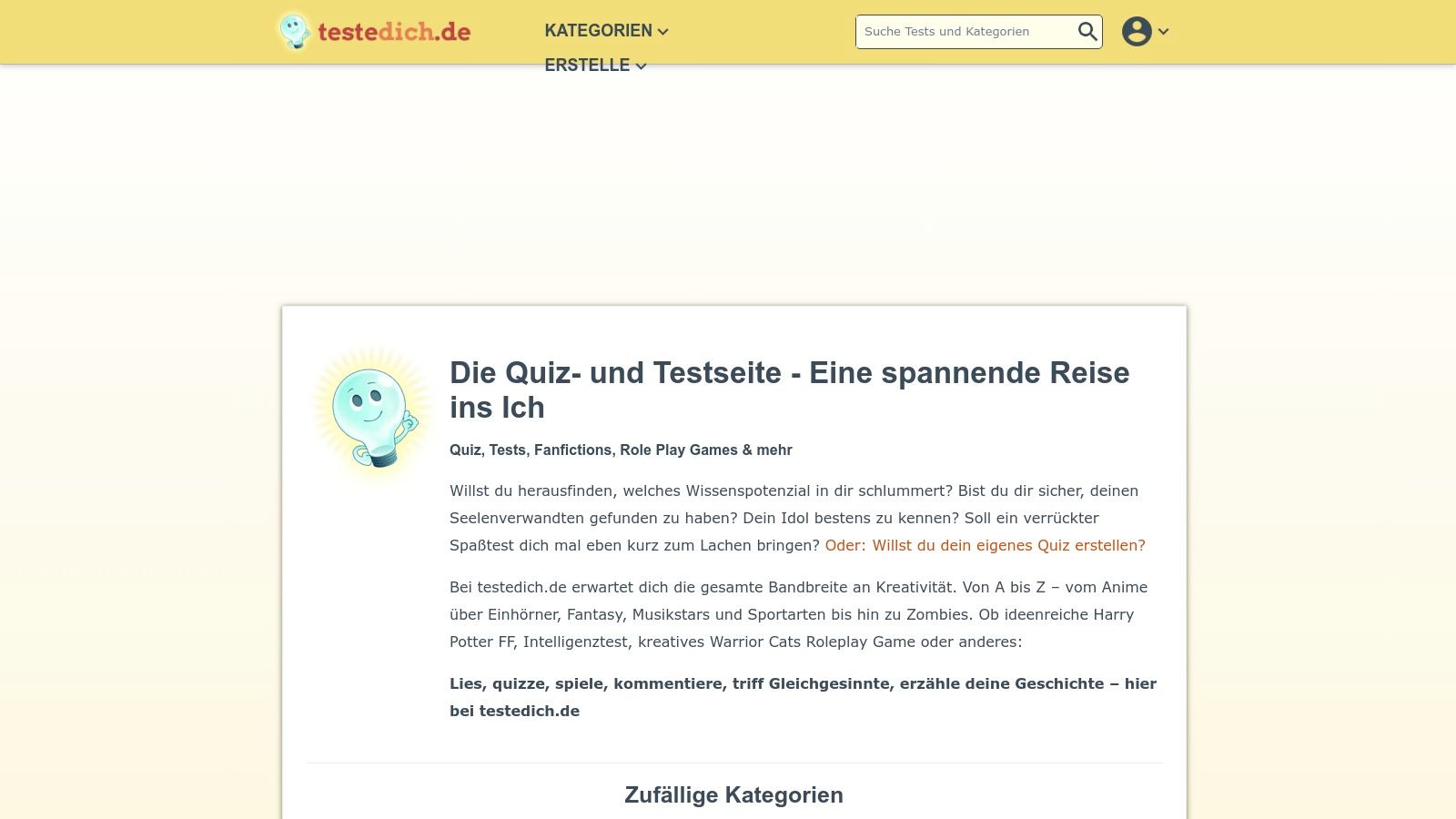
The core appeal is its accessibility and the sheer volume of content, much of which is created by its own user base. The platform offers a built-in quiz creation tool that requires no coding, allowing anyone to publish their own tests. This has resulted in a vast, eclectic collection covering everything from "Which magical creature are you?" to highly specific fandom quizzes. It’s a testament to the power of empowering a community to create its own interactive experiences.
Strategic Analysis & Breakdown
This type of platform operates on a classic, high-traffic, ad-supported model fuelled by user-generated content (UGC). Instead of investing heavily in developing its own proprietary tests, it provides the tools for the community to do the work. This creates an ever-expanding content library that attracts long-tail search traffic from a multitude of niche interests across the globe.
Key Strategy: The platform's success is built on a powerful feedback loop. Users create quizzes, share them with their friends, which in turn drives new users to the site who then might become creators themselves. It’s a self-perpetuating engine for traffic and engagement that requires minimal content investment from the platform owners.
This approach forgoes complex lead capture funnels in favour of maximising page views and ad impressions. The business model is simple: attract a large audience with free, endless entertainment and monetise that attention through display advertising. This model is a reminder that even simple, user-generated interactive tools can generate immense traffic and create a dedicated community, often far more effectively than a static, one-way lead magnet.
Unique Offerings & Takeaways
The most unique aspect of this model is its unapologetic focus on community and user creativity, which transcends any single language or culture.
- User-Generated Content: Its biggest strength is the built-in quiz maker, which democratises interactive content creation. This ensures a constant stream of fresh, relevant, and often hyper-niche quizzes.
- Monetisation: The strategy is straightforward ad revenue. This keeps the user experience free and open, removing all barriers to entry for both quiz-takers and creators.
- Global Reach: By being open to a worldwide audience, it captures cultural nuances and interests that a regionally focused platform might miss, creating a truly diverse content ecosystem.
For marketers, this model offers a powerful lesson in community building. It proves that creating a hub with user-driven interactive content can build a more loyal and engaged audience than a one-size-fits-all corporate approach. It highlights the value of providing a platform for your audience to express themselves, turning passive consumers into active creators and brand advocates.
7-Site Fun Personality Quiz Comparison
| Service | Implementation complexity 🔄 | Resource requirements ⚡ | Expected outcomes ⭐📊 | Ideal use cases 💡 | Key advantages |
|---|---|---|---|---|---|
| 16Personalities | 🔄 Low — quick online test; team setup available | ⚡ Low free; paid Career/Pro upgrades | ⭐ Approachable MBTI-style profiles; 📊 paid tiers add career depth | 💡 Casual self-discovery, social sharing, basic team use (paid) | Clean UI; widely recognized; refundable paid content |
| Truity | 🔄 Moderate — many test types to choose from | ⚡ Low for basic reports; paid full reports available | ⭐ Research-backed options (Big Five, Enneagram); 📊 deeper paid detail | 💡 Users who want a mix of entertainment and substantive results | Wide test variety; clear time estimates |
| BuzzFeed Quizzes | 🔄 Very low — instant, short quizzes | ⚡ Minimal — free, ad-supported | ⭐ Entertainment-first results; 📊 highly shareable, not scientific | 💡 Parties, social sharing, light pop-culture fun | Massive, constantly refreshed library; strong shareability |
| uQuiz | 🔄 Low–Moderate — creator-driven quiz building | ⚡ Low — free platform; optional registration | ⭐ Highly customizable/shareable outcomes; quality varies | 💡 Custom party quizzes, inside jokes, fandom content | Creator freedom; trending discovery; social notifications |
| Queendom (PsychTests) | 🔄 Moderate — long/formal tests available | ⚡ Medium — free snapshots; paid full/unlimited reports | ⭐ Mix of playful and serious assessments; 📊 paid reports give graphs/narratives | 💡 Users wanting both fun quizzes and more in-depth personality testing | Time-tested library; clear free vs paid delineation |
| Etsy (Printable Quizzes) | 🔄 Moderate — download and customize printables | ⚡ Medium — one-time purchase per seller; instant delivery | ⭐ Tangible, themed party materials; 📊 not standardized tests | 💡 In-person events, party hosts, themed take-home activities | Highly customizable, themed options; instant access |
| Community-Driven UGC | 🔄 Low — instant online quizzes and creator tools | ⚡ Minimal — free, ad-supported | ⭐ Hyper-niche, globally diverse content; variable depth | 💡 Global communities, classrooms, fan groups, broad-based fun | Global reach; easy quiz creation and sharing |
Stop Guessing, Start Building: Your Path to Interactive Content
We've journeyed through a diverse landscape of fun personality quizzes, from the psychological depth of 16Personalities and Truity to the viral, shareable magic of BuzzFeed and uQuiz. We’ve seen how even seemingly simple platforms like community-driven sites or the creative printables on Etsy tap into the fundamental human desire for self-discovery and connection. The common thread weaving through all these successful examples is their mastery of engagement. They don't just present information; they create a dialogue.
This is the fundamental power of interactive content. It transforms passive consumption into active participation, pulling your audience into an experience they co-create. While static PDFs and blog posts have their place, a well-designed quiz acts as a magnet, drawing in users, holding their attention, and delivering personalised value in a way that static content simply cannot match. It’s the difference between lecturing to a crowd and having a meaningful one-on-one conversation.
Your Blueprint for Action
The path from inspiration to implementation is shorter than you think. The key is to move beyond simply admiring these examples and start deconstructing their success for your own strategy. The most impactful quizzes we analysed share a few core principles you can replicate immediately.
- Prioritise Personalisation: The payoff must be worth the user's time. Whether it's a detailed personality profile or a lighthearted character match, the result needs to feel specific and insightful to them. Generic outcomes kill engagement and shareability.
- Design for the Experience: User experience is paramount. From the visual design and question wording to the seamless flow and mobile responsiveness, every element contributes. A clunky or confusing interface will lead to abandonment, no matter how brilliant your quiz concept is.
- Integrate with Intent: A quiz shouldn't be an island. As we saw with brands that successfully integrate lead capture and email segmentation, the quiz is the beginning of a longer conversation. Define your goal beforehand: is it lead generation, audience segmentation, or brand awareness? Then, build the quiz to serve that specific objective.
Choosing Your Toolkit and Moving Forward
The right tool depends entirely on your goals and resources. If you need deep psychological frameworks and robust validation, a platform inspired by Truity or Queendom might be your direction. If viral shareability and rapid creation are your priorities, the BuzzFeed model offers a powerful template. For B2B marketers, the focus should be on creating quizzes that solve a problem or qualify a lead, integrating smoothly with your CRM and marketing automation platforms. If you're unsure where your current lead generation strategy stands, using a tool like the free lead magnet audit from Magnethive can be incredibly revealing. It generates a full report analyzing your current efforts and gives you AI-powered ideas for new magnets, showing you exactly where an interactive quiz could make the biggest impact.
Before you build, ask yourself these critical questions:
- What specific business problem will this quiz solve?
- What unique value or insight can I offer my audience through the results?
- How will the quiz results connect to the next step in my customer's journey?
The true magic of fun personality quizzes lies in their ability to deliver tangible business results while providing genuine entertainment and value to the user. They are a powerful vehicle for understanding your audience on a deeper level, segmenting them effectively, and guiding them towards a solution you offer. Beyond personality quizzes, you can explore a variety of interactive post ideas to further engage your audience; for more inspiration, check out these other hot interactive posts on social media.
The era of guessing what your audience wants is over. The tools and strategies are at your fingertips. Now is the time to stop consuming and start creating. Build an experience that educates, entertains, and converts. Your audience is waiting.